Skip to content
Fire Rescue Pedia | Knowledge for life

Fire Rescue Pedia | Knowledge for life

Free & Open Source for Fire & Rescue Articles

  • Αρχική | Home
  • ΚΑΤΗΓΟΡΙΕΣ
    • Υγιεινή & Ασφάλεια
    • Ιστορία
    • Πυρόσβεση & Πυρασφάλεια
    • Πυρανίχνευση
    • Ανίχνευση Αερίων
    • Πρώτες Βοήθειες
    • Δασοπροστασία
    • Τεχνική Διάσωση
    • Συμβουλές
    • Τεχνολογία
    • Haz.Mat – CBRNE
  • ΣΕΜΙΝΑΡΙΑ – ΕΚΠΑΙΔΕΥΣΕΙΣ
  • ENGLISH
    • SPECIAL Articles
  • Quiz – Τέστ γνώσεων
  • Home
  • Special Articles in English
  • Fire Safety and Evacuation Requirements for Hospital Buildings
  • Special Articles in English
  • Κίμων Παντελίδης

Fire Safety and Evacuation Requirements for Hospital Buildings

6 min read
58
Κοινοποιήστε στα Social ή εκτυπώστε το άρθρο
Αξιολογήστε το άρθρο!
[Σύνολο: 0 Μέσο: 0]

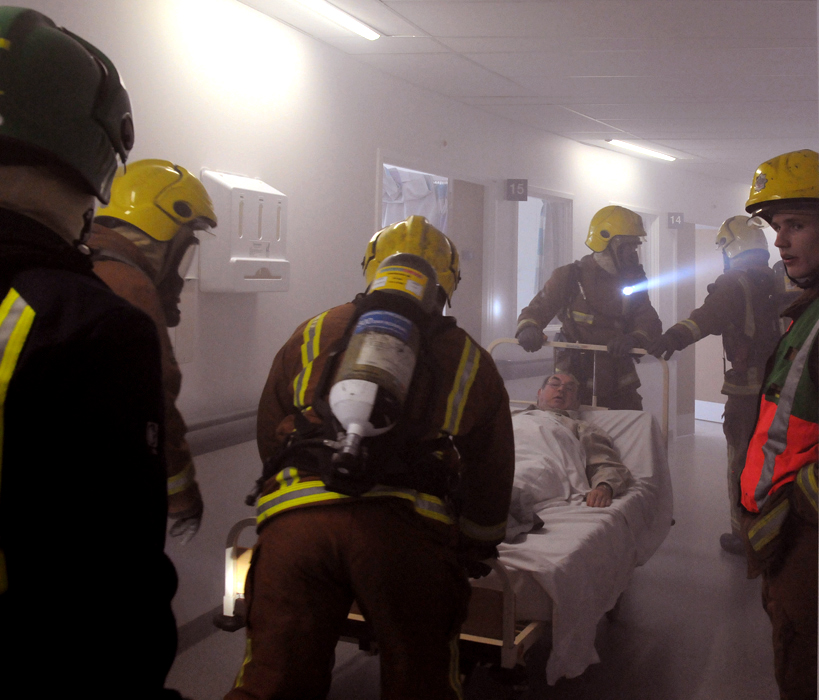
The evacuation of a hospital requires special consideration based on the premise that persons residing or visiting hospitals (other than abled bodied staff and visitors) might not be readily mobile and are likely to have some sort of ailment that requires hospital care and/or attention. Furthermore, patients in hospitals might be bed-ridden, or undergoing a surgical procedure (under local or general anaesthetic), or an examination (MRI scan), they might have temporary or permanent mobility, visual or other impairment that requires assistance in the event of an evacuation, or they might be kept on life support and/or other complex machinery that is vital to their health.

In any case, the complexities faced in hospitals due to the variety in the characteristics of occupants, as well as the work taking place[1] in these buildings, gives them a higher risk profile when considering the requirements of emergency procedures. As such, conventional methods for the evacuation of occupants in the event of a fire or fire alarm activation would not be appropriate for hospital buildings. The above measures could equally apply to residential care homes, where characteristics of occupants would necessitate assisted evacuation.

The evacuation strategy required for hospitals is called ‘progressive horizontal evacuation’ and the philosophy behind this strategy is to be able to move people into places of relative safety via the method of horizontal movement through different fire compartments with adequate fire separation between areas. This is necessary where vertical evacuation is not an immediate option due to the characteristics of the occupants (embedded patients, patients under treatment) and where horizontal movement can be more easily facilitated and, under the protection of passive fire protection, temporarily hold people whilst further action is decided.

As stated in BS 5839-1 (2013: 45), patients can be moved horizontally to adjacent compartments to the fire affected compartment, and in large hospitals, it may be the case, that patients can keep moving horizontally if the situation worsens without vertical escape being necessary. In smaller premises, it may be decided that vertical evacuation is appropriate following the initial phase of horizontal movement, and this could be achieved by specialist evacuation lifts[2].

A staged alarm system is required to facilitate ‘progressive horizontal evacuation’. The alarm can either be in two stages or three stages. A two stage alarm would have the capability of sounding an ‘Alert’ alarm with the scope of preparing people in areas adjacent to the area involved in fire. This could be in the form of an intermittent alarm (electronic or bell), or, a voice alarm with a pre-recorded message. It will also have the capability of sounding an ‘Evacuate’ alarm in areas that might immediately be (or become) affected by fire. This alarm should initiate the evacuation procedure for the affected area.
A three staged alarm would have exactly the same settings with regard to the ‘Alert’ and ‘Evacuate’ settings, but will also incorporate a staff alarm to designated trained staff who will be allowed a given time slot to investigate before an ‘Evacuate’ alarm is sounded in the affected area. This alarm system will effectively accommodate a phased strategy, in the form of progressive horizontal evacuation, meaning that not all areas will evacuate simultaneously.

The areas that might be directly affected by fire will horizontally evacuate into an adjacent compartment under a full alarm; areas adjacent to these will sound an ‘Alert’ (or prepare) signal, and other areas might not be affected by this situation if it is deemed a ‘non-emergency’, or will also evacuate in phases at a later stage.

Fire alarm and detection systems serve the purpose of providing early warning to staff and other occupants, and the initiation of the evacuation procedure in a timely manner. Early detection of fire will also lead to any fire being dealt with faster, therefore, limiting the potential damage or harm that might be caused. Passive fire protection, however, is essential to this strategy.

HTM 05-02 (2015) describes the design features essential to achieve adequate compartmentation between areas in order to accommodate horizontal evacuation. These are dependent on storey floor size and storey height above ground level. In general, compartments need to achieve a minimum 60min fire resistance between areas, though this may be reduced to 30min where sprinklers are fitted. Sub-compartments, leading into compartments, need to have a minimum 30min fire resistance between sub-compartments.

Each compartment should be capable of hosting the maximum number of the most highly occupied adjacent compartment, including its normal occupant capacity and any ancillary machinery. Corridors and circulations routes need to meet fire resisting standards equal to those of the compartment and be of adequate width to be able to manoeuvre embedded patients including any complex equipment/machinery[3].

In more detail, in a hospital building of no more than 12 metres in height above ground level and no storey larger than 1000 m², every floor with patient access should contain no more than 30 patients and be divided into a minimum of two compartments. If the compartment also provides sleeping accommodation, then no more than 20 beds should be provided. In buildings of no more than 12 metres above ground level but with floors larger than 1000 m², floors should be divided into a minimum of 3 compartments and may use a hospital street as one of the compartments[4].

Hospital streets are a special type of compartment that connect final exits, stairways and lead to department entrances. They are also the main circulation route for staff, patients and visitors. They generally serve two purposes, one of which would be to act as a separate compartment and an evacuation route from an adjoining space affected by fire, hence, they must have a minimum fire resistance equal to a compartment (i.e. 60min). Hospital streets also serve the purpose of providing the location for a fire-fighting bridge-head from which fire-fighting operations will commence[5].
In buildings with floors above 12 metres in height from ground level, at least four compartments should be created and no compartments should be smaller than 500m², though this may be reduced to 350m² if the building is provided with sprinklers. Compartments and sub-compartments should be able to provide two directions of escape from any location, and where only single direction of escape is provided, there are certain limitations and restrictions enforced.

The maximum travel distance in single direction before having a choice of escape routes is 15 metres from in-patient space and 18 metres from all other areas of healthcare buildings[6]. Respectively, the maximum travel distance from any point within a compartment should be no more than 60 metres to each of two adjoining compartments or an adjoining compartment leading to a stairway or final exit.

The maximum travel distance from any point within a sub-compartment should be no more than 30 metres to an adjoining compartment or sub-compartment leading to a stairway or final exit. It is logical that the lesser time value for sub-compartments in comparison to compartments is implemented to compensate for the lesser fire resistance present in sub-compartments.

As the major concern here, and indeed a legal requirement, is life safety, then it is understandable that these measures are in place to satisfy, as far as is reasonably practicable, this requirement. Evacuation from hospital buildings and care homes is a complicated process due to the nature and characteristics of occupants, and what makes matters even more complicated is that there is little opportunity to practice these strategies under simulated conditions. Therefore, evacuation procedures in such premises are usually highly reliant on table top exercises rather than the ‘real deal’.

As such, the reliability of, mainly, the passive fire protection measures, with the support of active controls, must be ensured in order to achieve, not only, legal compliance, but, ultimately, a positive outcome in an emergency situation.

by Kimon Pantelides, MSc, GIFireE, MIAAI

Fire Safety Officer at University College London

Notes:

  • [1] This would include a number of materials that are used including compressed gases, solvents and other chemicals.
  • [2] There is also scope to use accommodation lifts for evacuation purposes, but these must be in safe and separate compartments to the one affected by fire and must follow the guidance of BD 2466 – ‘Guidance on emergency use of lifts or escalators and fire and rescue service operation’ (HTM 05-02, 2015: 28).
  • [3] The recommended minimum clear corridor width for circulation of beds/trolleys is 2150 mm and 2950 mm where two beds need to pass regularly (Health Building Note 00-04, 2013: 5).
  • [4] HTM 05-02, (2015: 18)
  • [5] HTM 05-02 (2015: 7)
  • [6] HTM 05-02 (2015: 22).
Αξιολογήστε το άρθρο!
[Σύνολο: 0 Μέσο: 0]

Continue Reading

Previous: Η Συμπεριφορά της φωτιάς στο Οικοδομικό περιβάλλον, Πέμπτο Μέρος
Next: Compatibility in Hydraulic Rescue Tools…myth or reality?

Trending

The Vital Role of Incident Command in Firefighting: A Global Perspective 1

The Vital Role of Incident Command in Firefighting: A Global Perspective

Σωλήνες Πυρόσβεσης: Σύγχρονες Προδιαγραφές, Υλικά και Πρακτικές Χρήσης 2

Σωλήνες Πυρόσβεσης: Σύγχρονες Προδιαγραφές, Υλικά και Πρακτικές Χρήσης

Οδηγίες για τον ασφαλή χειρισμό του υγραερίου από την Πετρογκάζ 3

Οδηγίες για τον ασφαλή χειρισμό του υγραερίου από την Πετρογκάζ

Το πρώτο τροχαίο ατύχημα στην Ελλάδα 4

Το πρώτο τροχαίο ατύχημα στην Ελλάδα

Chemical Protective Suits Communication Guide: Seven Essential Hand Signals 5

Chemical Protective Suits Communication Guide: Seven Essential Hand Signals

Οξεία Μέθη και Αλκοολική Δηλητηρίαση: Οδηγός Πρώτων Βοηθειών 6

Οξεία Μέθη και Αλκοολική Δηλητηρίαση: Οδηγός Πρώτων Βοηθειών

Related Stories

The Vital Role of Incident Command in Firefighting: A Global Perspective
6 min read
  • Special Articles in English
  • Συμεών Μπανός

The Vital Role of Incident Command in Firefighting: A Global Perspective

14
Chemical Protective Suits Communication Guide: Seven Essential Hand Signals
7 min read
  • Special Articles in English
  • Ιωάννης Ρέτσιος

Chemical Protective Suits Communication Guide: Seven Essential Hand Signals

27
Managing Industrial Electrical Fires
4 min read
  • Special Articles in English

Managing Industrial Electrical Fires

22

Χορηγούμενη

Search&Rescue

Πυροσβεστικό Σώμα

Χορηγούμενη

Search&Rescue

Τελευταία άρθρα

The Vital Role of Incident Command in Firefighting: A Global Perspective 1

The Vital Role of Incident Command in Firefighting: A Global Perspective

Σωλήνες Πυρόσβεσης: Σύγχρονες Προδιαγραφές, Υλικά και Πρακτικές Χρήσης 2

Σωλήνες Πυρόσβεσης: Σύγχρονες Προδιαγραφές, Υλικά και Πρακτικές Χρήσης

Οδηγίες για τον ασφαλή χειρισμό του υγραερίου από την Πετρογκάζ 3

Οδηγίες για τον ασφαλή χειρισμό του υγραερίου από την Πετρογκάζ

Το πρώτο τροχαίο ατύχημα στην Ελλάδα 4

Το πρώτο τροχαίο ατύχημα στην Ελλάδα

Chemical Protective Suits Communication Guide: Seven Essential Hand Signals 5

Chemical Protective Suits Communication Guide: Seven Essential Hand Signals

Οξεία Μέθη και Αλκοολική Δηλητηρίαση: Οδηγός Πρώτων Βοηθειών 6

Οξεία Μέθη και Αλκοολική Δηλητηρίαση: Οδηγός Πρώτων Βοηθειών

Πυρίμαχες Κουβέρτες: Τι Είναι, Πώς Λειτουργούν και Πότε Χρησιμοποιούνται 7

Πυρίμαχες Κουβέρτες: Τι Είναι, Πώς Λειτουργούν και Πότε Χρησιμοποιούνται

Managing Industrial Electrical Fires 8

Managing Industrial Electrical Fires

Τεστ γνώσεων | Τι κάνετε αν πάρει φωτιά το όχημα σας 9

Τεστ γνώσεων | Τι κάνετε αν πάρει φωτιά το όχημα σας

Σακίδιο Εκτάκτου Ανάγκης – Οδηγός προετοιμασίας για την οικογένεια 10

Σακίδιο Εκτάκτου Ανάγκης – Οδηγός προετοιμασίας για την οικογένεια

RSS News

  • Στην Αθήνα ο Ζελένσκι την Κυριακή: Η ενέργεια στο επίκεντρο της συνάντησης με Μητσοτάκη 15.11.2025
    Ολιγόωρη επίσκεψη στην Αθήνα πραγματοποιεί αύριο Κυριακή ο Ουκρανός πρόεδρος Βολοντίμιρ Ζελένσκι, σε μια συνάντηση με σαφές ενεργειακό αποτύπωμα και φόντο τις αυξημένες ανάγκες της Ουκρανίας ενόψει του χειμώνα.
  • Ευρωλίγκα: Ο Φαρίντ (δεν) κάνει τον Λεσόρ και ο Ντόρσεϊ τον… Βεζένκοφ 15.11.2025
    Διπλή ανάκαμψη του Παναθηναϊκού και πισωγύρισμα του Ολυμπιακού στην ευρωπαϊκή «διαβολοβδομάδα». Η «ένεση» του Φαρίντ στη λειτουργία των «πράσινων» και στον θρίαμβο στη Μαδρίτη και οι «άδειοι» Πειραιώτες στην ήττα στο Μιλάνο…
  • Θεσσαλονίκη: Συνελήφθησαν έξι ανήλικες μετά από επίθεση σε δύο 13χρονες 15.11.2025
    Η αστυνομία προχώρησε και στη σύλληψη των γονιών των έξι δράστιδων. 
  • Επεισόδια στο Πολυτεχνείο – Τραυματίες μεταφέρθηκαν σε νοσοκομείο 15.11.2025
    Ενταση σημειώθηκε το πρωί του Σαββάτου στον χώρο του Πολυτεχνείου, το οποίο έχει ανοίξει για τις τριήμερες εκδηλώσεις της 52ης επετείου.
  • Σκόπια: Χιλιάδες διαδηλωτές ζητούν δικαιοσύνη για τα 63 θύματα της τραγωδίας στο Κότσανι 15.11.2025
    Στην πυρκαγιά που ξέσπασε τον περασμένο Μάρτιο σε νυχτερινό κέντρο, έχασαν τη ζωή τους 63 άνθρωποι —στην πλειονότητά τους νεαρής ηλικίας— ενώ περίπου 200 ακόμη τραυματίστηκαν.
  • Ουκρανία: Σκάνδαλο διαφθοράς συγκλονίζει την κυβέρνηση Ζελένσκι 15.11.2025
    Ενα από τα σοβαρότερα σκάνδαλα διαφθοράς από την αρχή της θητείας του Βολοντίμιρ Ζελένσκι έχει πυροδοτήσει οργή σε ολόκληρη την Ουκρανία, μετά τις αποκαλύψεις για σακούλες γεμάτες χρήματα, πολυτελή διαμερίσματα στο Κίεβο με χρυσές τουαλέτες και ηχογραφήσεις αξιωματούχων να συζητούν για ξέπλυμα χρήματος.
  • Ρετσίνα: 10 εξαιρετικά κρασιά που βγάζουν τη… ρετσινιά από το εθνικό μας κρασί 15.11.2025
    Ρωτήσαμε επτά ειδήμονες του κρασιού ποιες ελληνικές ετικέτες ξεχωρίζουν σε διάφορες κατηγορίες. Εδώ έχουμε τις Ρετσίνες που επέλεξαν: μια εξαιρετική δεκάδα που αλλάζει το τοπίο του εθνικού μας κρασιού και που αξίζει πραγματικά να δοκιμάσετε.
  • Πορτογαλία: Συνολικά τρεις νεκροί και πολλοί τραυματίες από το σαρωτικό πέρασμα της καταιγίδας «Κλαούντι» 15.11.2025
    Η Πολιτική Προστασία της Πορτογαλίας δήλωσε σήμερα το πρωί ότι είχε καταγράψει περισσότερα από 3.300 περιστατικά από την Τετάρτη, κυρίως πλημμύρες και πτώσεις δέντρων στο σύνολο της πορτογαλικής επικράτειας.
  • Σίνδος: Ακινητοποιήθηκε λόγω τεχνικού προβλήματος αμαξοστοιχία με 95 επιβάτες 15.11.2025
    Σύμφωνα με την ενημέρωση της Hellenic Train, η αμαξοστοιχία, μετά την αντικατάσταση της μηχανής, αναχώρησε για τη Λάρισα με καθυστέρηση 90 λεπτών.
  • Τροχαίο ατύχημα στο Βελεστίνο με ανατροπή μικρού λεωφορείου – Δέκα τραυματίες 15.11.2025
    Σύμφωνα με τις έως τώρα πληροφορίες, δέκα άτομα έχουν τραυματιστεί ελαφρά και μεταφέρονται με ασθενοφόρα στο Νοσοκομείο Βόλου, για παροχή πρώτων βοηθειών.
  • Ο Τραμπ εντείνει την πίεση στη Βενεζουέλα χωρίς ξεκάθαρο τελικό στόχο 15.11.2025
    Η διοίκηση Τραμπ εντείνει με ταχύτητα την πίεσή της προς τη Βενεζουέλα, καθώς το αεροπλανοφόρο «Ford», το μεγαλύτερο των ΗΠΑ, μετακινείται προς την Καραϊβική, την ώρα που οι σύμβουλοι του προέδρου διατυπώνουν αντικρουόμενες εξηγήσεις για το τι ζητά να πετύχει η Ουάσιγκτον.

RSS Fire Rescue 1

  • Lost Purple Heart medal returned to family of Ill. soldier, firefighter 15.11.2025
    Army Rifleman James R. Bennett, wounded in France and Germany during World War II, later served Oak Lawn as a volunteer firefighter and part-time police officer
  • Minn. researchers test smoke-sensing drones and AI to help fight wildfires 15.11.2025
    University of Minnesota researchers flew autonomous, student-built drones to sample and analyze smoke plumes to help firefighters predict spread, improve tactics and manage prescribed burns
  • Should NYC split EMS from FDNY? Pay, staffing and patient care are on the line 14.11.2025
    A push to return EMS back to its own agency is gaining momentum amid response times, pay parity demands and warnings from FDNY leadership that a breakup could add cost and complexity
  • S.C. chiefs resign after officials skip announcement over lack of funding 14.11.2025
    Just three months in, Wagener's chief and assistant chief quit after citing a plunge in tax revenue, unsafe equipment and no-shows from town leaders
  • Attorneys clash over basement, go/no-go and mayday in Ill. LODD trial 14.11.2025
    Deliberations begin in a wrongful death case alleging Rock Falls chiefs showed willful, wanton disregard in the 2021 fire that killed Sterling Lt. Garrett Ramos
  • Photo of the Week: FDNY dignified transfer 14.11.2025
    FDNY members honored Firefighter Patrick Brady with a dignified transfer after his death from cardiac arrest at a Brooklyn fire
  • Fast-moving Calif. wildfire forces evacuations, damages structures 14.11.2025
    The Pack Fire near California’s Nevada border has damaged at least 15 structures, closed part of Highway 395
  • Public safety media relations: 6 tips for working with journalists 14.11.2025
    Learn how to work with the media, not against it
  • NFPA standards help make the case for funding 13.11.2025
    How standards can highlight station needs or deficiencies impacting your department’s delivery of service

Αυτό το διαβάσατε;

The Vital Role of Incident Command in Firefighting: A Global Perspective
6 min read
  • Special Articles in English
  • Συμεών Μπανός

The Vital Role of Incident Command in Firefighting: A Global Perspective

14
Σωλήνες Πυρόσβεσης: Σύγχρονες Προδιαγραφές, Υλικά και Πρακτικές Χρήσης
1 min read
  • Ιωάννης Ρέτσιος
  • Πυρόσβεση & Πυρασφάλεια

Σωλήνες Πυρόσβεσης: Σύγχρονες Προδιαγραφές, Υλικά και Πρακτικές Χρήσης

12
Οδηγίες για τον ασφαλή χειρισμό του υγραερίου από την Πετρογκάζ
1 min read
  • Συμβουλές
  • Υγιεινή & Ασφάλεια

Οδηγίες για τον ασφαλή χειρισμό του υγραερίου από την Πετρογκάζ

14
Το πρώτο τροχαίο ατύχημα στην Ελλάδα
1 min read
  • Ιστορία

Το πρώτο τροχαίο ατύχημα στην Ελλάδα

12
Τα πνευματικά δικαιώματα των κειμένων, των φωτογραφιών και των άλλων επιμέρους στοιχείων ανήκουν στο Firepedia.gr και οποιαδήποτε αναδημοσίευση, αναπαραγωγή, παρουσίαση στο κοινό, ραδιοτηλεοπτική μετάδοση ή αναμετάδοση, ψηφιακή εκπομπή, ψηφιακή ραδιοτηλεοπτική αναμετάδοση και γενικά οποιαδήποτε χρήση, εκμετάλλευση ή διάδοση οποιουδήποτε στοιχείου σε έντυπη, ηλεκτρονική, ψηφιακή ή οποιαδήποτε άλλη μορφή και με οποιοδήποτε μέσο μέρους ή του συνόλου του κόμβου του Διαδικτύου του Firepedia.gr απαιτεί προηγούμενη άδεια από τον Διαχειριστή του.

Απαγορεύεται η Αναδημοσίευση άρθρων και κειμένων του περιοδικού μας χωρίς έγκριση, επιτρέπουμε την μερική αναδημοσίευση άρθρων (1/3) με ενεργή παραπομπή (link) στην ιστοσελίδα μας, Νόμος 2121/1993 και κανόνες Διεθνούς Δικαίου που ισχύουν στην Ελλάδα.
Σημείωση: Ο νόμος 2121/1993 είναι επικαιροποιημένος μέχρι και το ν. 4761/2020 (ΦΕΚ A' 248/13.12.2020)

Τα άρθρα μας έχουν καθαρά συμβουλευτικό και ενημερωτικό χαρακτήρα & σκοπό και ανανεώνονται ή τροποποιούνται συνεχώς ή κατά τακτά χρονικά διαστήματα. Δεδομένης δε της φύσης και του όγκου του διαδικτύου και της συνεχούς ροής ή/ και μεταβολής των μεταδιδόμενων μέσω αυτού πληροφοριών, οι Πληροφορίες παρέχονται από την Ιστοσελίδα του Fire Rescue Pedia ως έχουν, χωρίς να παρέχεται από το Fire Rescue Pedia οιαδήποτε εγγύηση, ιδίως ως προς την πληρότητα, επάρκεια ή και την χρονική επικαιροποίησή τους.


Εμπορική Εκμετάλλευση - FORMULA ΠΥΡΟΣΒΕΣΤΗΡΕΣ ΑΕ ΙΕΠΥΑ

ΠΟΛΙΤΙΚΗ ΑΠΟΡΡΗΤΟΥ | ΠΟΛΙΤΙΚΗ COOKIES | ΠΟΙΟΙ ΕΙΜΑΣΤΕ | ΕΠΙΚΟΙΝΩΝΙΑ - CONTACT US | PARTNERS

Fire Rescue Pedia © 2000 - 2025 | Powered by Pressidium® Managed WordPress Hosting
Fire Rescue Pedia | Knowledge for life
Διαχείριση Συγκατάθεσης
Για να παρέχουμε την καλύτερη εμπειρία, χρησιμοποιούμε τεχνολογίες όπως cookies για την αποθήκευση ή/και την πρόσβαση σε πληροφορίες συσκευών. Η συγκατάθεση για τις εν λόγω τεχνολογίες θα μας επιτρέψει να επεξεργαστούμε δεδομένα προσωπικού χαρακτήρα, όπως συμπεριφορά περιήγησης ή μοναδικά αναγνωριστικά σε αυτόν τον ιστότοπο. Η μη συγκατάθεση ή η ανάκληση της συγκατάθεσης, μπορεί να επηρεάσει αρνητικά ορισμένες λειτουργίες και δυνατότητες.
Λειτουργικά Πάντα ενεργό
Η τεχνική αποθήκευση ή πρόσβαση είναι απολύτως απαραίτητη για τον νόμιμο σκοπό της δυνατότητας χρήσης συγκεκριμένης υπηρεσίας που ζητείται ρητά από τον συνδρομητή ή τον χρήστη ή με αποκλειστικό σκοπό τη μετάδοση επικοινωνίας μέσω δικτύου ηλεκτρονικών επικοινωνιών.
Προτιμήσεις
Η τεχνική αποθήκευση ή πρόσβαση είναι απαραίτητη για τον νόμιμο σκοπό της αποθήκευσης προτιμήσεων που δεν ζητούνται από τον συνδρομητή ή τον χρήστη.
Στατιστικά
Η τεχνική αποθήκευση ή πρόσβαση που χρησιμοποιείται αποκλειστικά για στατιστικούς σκοπούς. Η τεχνική αποθήκευση ή πρόσβαση που χρησιμοποιείται αποκλειστικά για ανώνυμους στατιστικούς σκοπούς. Χωρίς κλήτευση, η εθελοντική συμμόρφωση εκ μέρους του Παρόχου Υπηρεσιών Διαδικτύου ή πρόσθετες καταγραφές από τρίτο μέρος, οι πληροφορίες που αποθηκεύονται ή ανακτώνται για το σκοπό αυτό από μόνες τους δεν μπορούν συνήθως να χρησιμοποιηθούν για την αναγνώρισή σας.
Εμπορικής Προώθησης
Η τεχνική αποθήκευση ή πρόσβαση απαιτείται για τη δημιουργία προφίλ χρηστών, για την αποστολή διαφημίσεων ή για την καταγραφή του χρήστη σε έναν ιστότοπο ή σε διάφορους ιστότοπους για παρόμοιους σκοπούς εμπορικής προώθησης.
  • Διαχείριση επιλογών
  • Διαχείριση υπηρεσιών
  • Manage {vendor_count} vendors
  • Διαβάστε περισσότερα για αυτούς τους σκοπούς
Προβολή προτιμήσεων
  • {title}
  • {title}
  • {title}