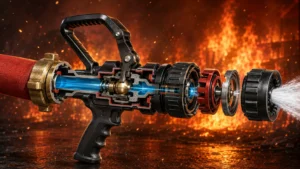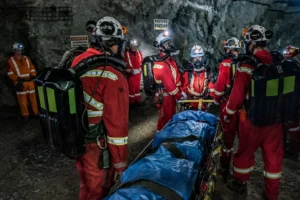
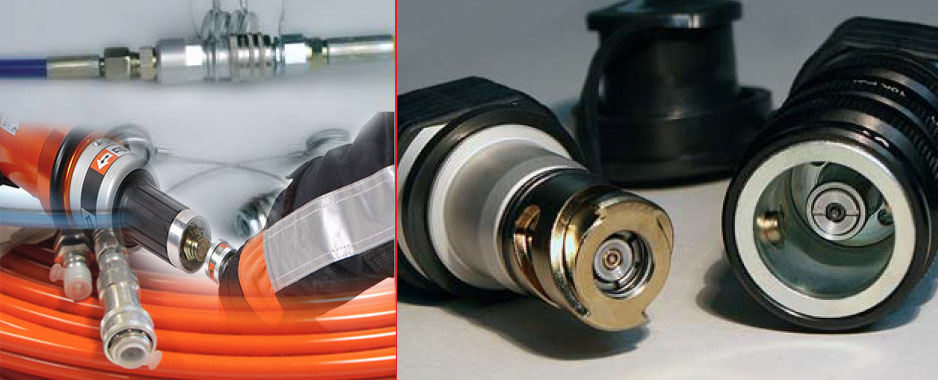
One of the most common questions I am asked to answer as a technician and trainer in the use of hydraulic rescue tools is whether there is compatibility of couplings between different companies. This is a very interesting question which I wish to answer analytically through this article.
Every company of hydraulic rescue tools adjusts the construction and the innovations of its tools according to the highest sale share that it has worldwide. European companies usually aim at Europe but in other countries, too. The construction of their tools is under European legislations and specifications, sometimes making further adjustments in certain countries, such as in the USA, so that there can be adjusted to the USA principles, too.
Compatibility in hydraulic rescue tools is not only a matter of whether two quick couplings physically fit together. The coupling and the high-pressure hose are only parts of a complete hydraulic system.
For a pump, hose and rescue tool to be considered truly compatible, we also need to look at the working pressure, oil flow, return pressure, hydraulic fluid, hose and coupling ratings, available oil volume and the requirements of the tool itself. Most importantly, the specific combination must be approved by the manufacturer.
A coupling that looks similar — or even physically connects — does not automatically make two rescue systems compatible or approved for combined use.
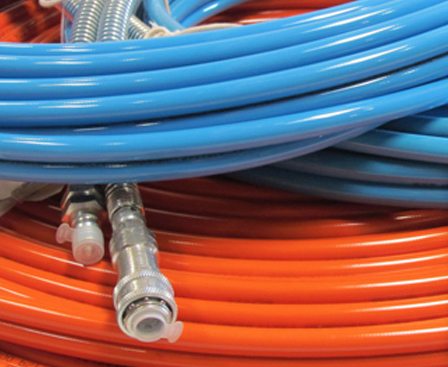
High-Pressure Hoses: Construction, Inspection and Service Life
High-pressure rescue hoses are multi-layer reinforced components, and their exact construction varies from one manufacturer and system to another. Different synthetic reinforcement materials may be used, including high-strength aramid fibres. Holmatro CORE, for example, uses a high-pressure inner hose protected inside a low-pressure return hose with para-aramid reinforcement.
It is therefore not correct to treat all rescue hoses as essentially the same simply because they operate above 650 bar. Today we find systems working at approximately 350 bar, 700 bar, 720 bar and 724 bar, with different architectures and different operating requirements. The hose must always be the one specified for the particular system.
Many colleagues still ask me the same question: how long does a high-pressure rescue hose last? There is no single service-life figure that applies to every manufacturer. We must follow the manual and maintenance schedule of the specific system.
In several current systems the maximum replacement interval is 10 years from the date of manufacture, but a hose must be replaced earlier if it shows leakage, bulging, cuts, kinks, exposed reinforcement, damaged end fittings or any other sign of deterioration. Holmatro and LUKAS, for example, both specify replacement no later than 10 years unless a stricter requirement applies.
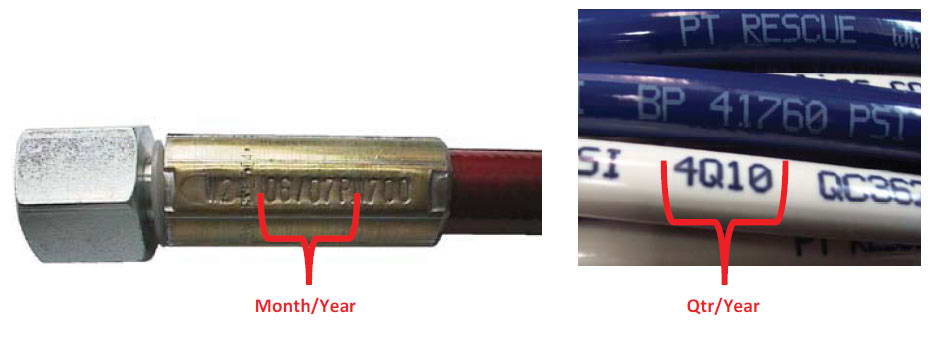
For that reason, the hose must be inspected regularly and removed from service immediately if there is leakage, swelling, kinking, visible reinforcement, damaged crimped ends or any other defect. The manufacturing date should be checked in the location and format specified by the manufacturer.
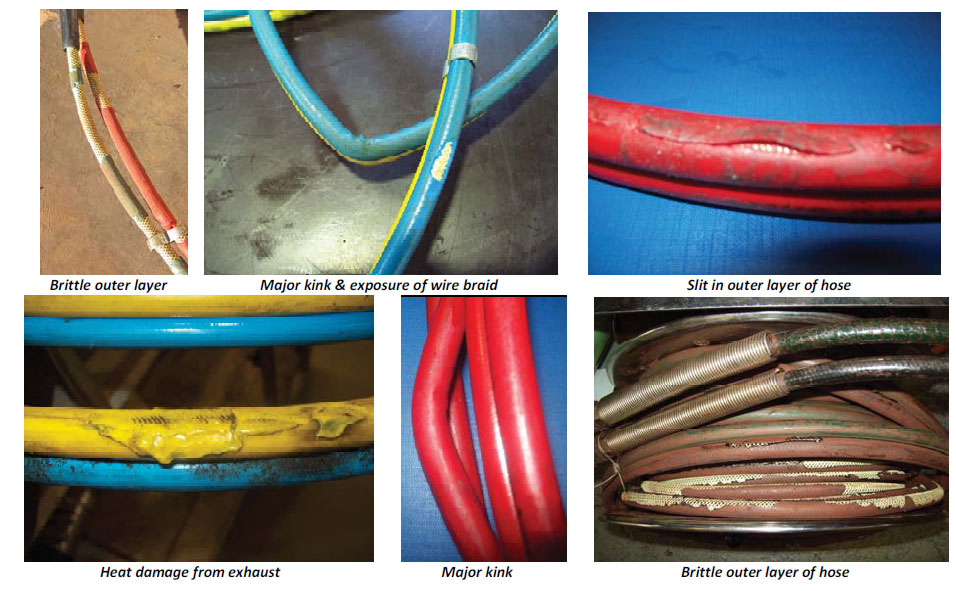
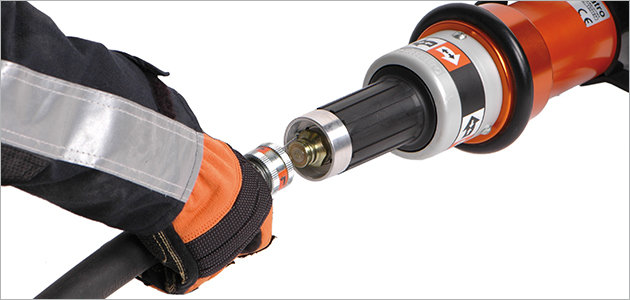
Attention should be paid when connecting the couplings so that no DIRT goes inside because then the hose runs the risk of “choking up”, leaving no other option but to be needing replacement. In addition, “high pressure hoses should be dealt with care” because bendings, wrong angles and wrong extensions will wear them out and ruin them. What follows is examples of right and wrong.
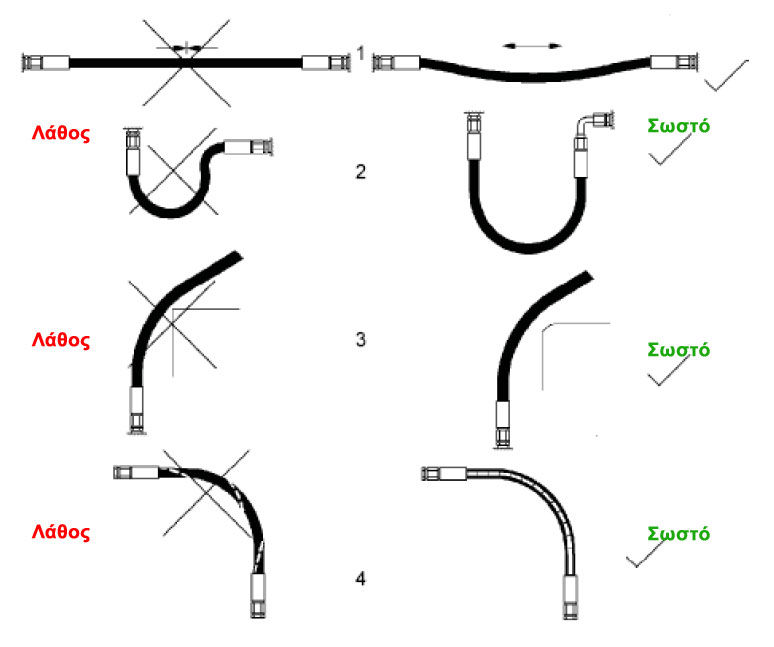
I would no longer give a general instruction to flush the inside of couplings with hydraulic oil, blow them out with compressed air and then apply lithium grease. The wrong lubricant or contamination can affect O-rings, valves and the hydraulic fluid. If a coupling requires lubrication, the correct product and procedure should come from the service instructions for that specific system.
If two couplings do not connect easily, do not force them. Check for dirt, damage, the correct coupling type and possible trapped pressure according to the manufacturer’s instructions. If the problem is not obvious, stop and have the system checked by a qualified technician.
Some modern couplings are specifically designed to connect or disconnect while the system is flowing or pressurised, but this is a feature of the particular coupling and system. It must never be treated as a general rule for every rescue tool or every brand.
Couplings and Compatibility Between Different Manufacturers
In the original version of this article I compared ten well-known manufacturers and the coupling systems they used at the time. The market has changed considerably since then. We now have newer generations of single couplings, different working pressures, battery-powered hydraulic tools and even electromechanical rescue tools with no hydraulic circuit at all.
For that reason, the following section should now be read as an updated technical comparison of the systems, not as a list of couplings that can automatically be mixed between brands.
In alphabetical order, the construction companies are (press to watch their websites) :
- AMKUS Rescue Systems
- Champion Rescue Tools
- Genesis Rescue Systems
- Holmatro Rescue Systems
- HURST Rescue
- Lancier Hydraulik Systems
- LUKAS Hydraulik GmbH
- RESQTEC Systems
- TNT Rescue Systems
- WEBER Rescue Systems
Important update: after reviewing the article again, I would no longer state that six manufacturers share the same coupling in a way that allows safe interchange of rescue tools. Similar geometry does not prove system compatibility. In fact, current AMKUS instructions explicitly state that AMKUS tools should be used with AMKUS equipment and warn that mixing manufacturers may lead to operational problems, failure or warranty issues.
AMKUS Rescue Systems
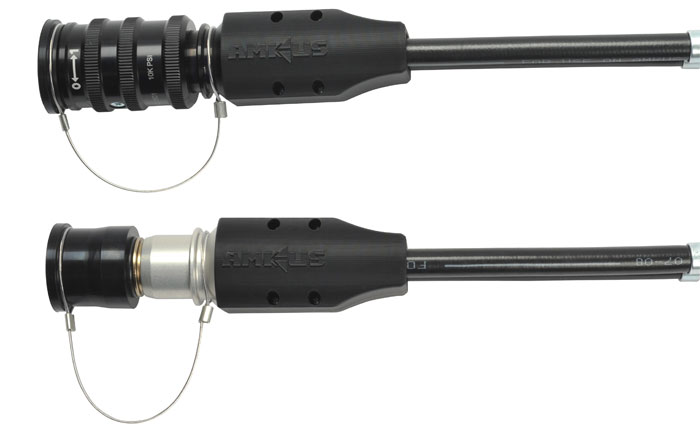
Today AMKUS still offers hose-connected hydraulic rescue tools as well as battery-powered tools. Its hydraulic range includes both standard and mono-coupling configurations, with systems operating at around 10,500 psi / 724 bar.
When I reviewed the compatibility question again for this update, AMKUS was one of the clearest examples. The manufacturer now states that AMKUS tools should be used with AMKUS equipment. So even if another coupling looks similar or can be made to fit mechanically, I would not consider a mixed-brand combination acceptable without formal approval.
AMKUS also allows its mono couplings to be connected or disconnected under flow in the configurations described by the manufacturer. That is a feature of the AMKUS system itself, not a general permission to connect equipment from another brand.

Champion Rescue Tools
In the original article I listed Champion Rescue Tools with a conventional standard coupling.
After checking the available information again during this revision, I was not able to find recent and sufficiently detailed official technical documentation that would allow me to confirm safe compatibility with another manufacturer. For existing Champion equipment, I would therefore follow the instructions for the exact model and the specifications provided by the manufacturer or an authorised service centre.
Genesis Rescue Systems
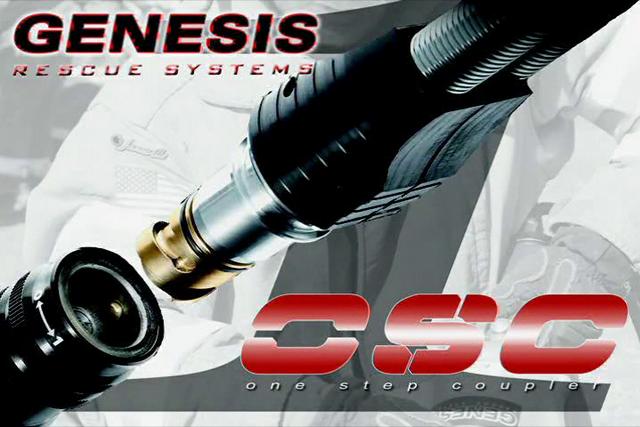
Genesis still offers hose-connected hydraulic rescue tools and power units with different coupling options, including Standard, Flat-Face and OSC™, while also offering battery-powered EFORCE tools.
In the older version of this article I discussed possible compatibility between the OSC system and WEBER or LUKAS. With today’s information I would be more careful with that statement. Similar coupling geometry is not enough; any mixed-brand connection should be confirmed for the exact pump, hose and tool involved.
The OSC system is designed so that, in the correct Genesis configuration, the operator does not always have to return the pump to a neutral position just to connect or disconnect the tool. Again, that is a Genesis system feature, not proof of cross-brand compatibility.
Holmatro Rescue Systems
Holmatro continues to use its CORE Technology. In this coaxial hose-in-hose design, the high-pressure line is contained inside the low-pressure return line. Current CORE rescue systems operate at a maximum working pressure of 720 bar.
The CORE coupling allows quick tool changes and is designed as part of the complete Holmatro system. I would therefore treat CORE as a Holmatro system rather than as a common coupling standard that can automatically be shared with other brands.
HURST Jaws of Life
The Streamline coupling mainly belongs to earlier generations of hose-connected HURST rescue tools.
Today HURST has moved much of its product range toward the eDRAULIC E3 and E3 CONNECT platforms, where the tool operates without a separate hydraulic power unit and rescue hose.
This also changes what we mean by compatibility. With older Streamline equipment, the correct HURST instructions for the exact model remain the reference. With newer battery tools, compatibility increasingly means common batteries, chargers, diagnostics, service support and the ability to share equipment within the same platform.
Lancier Rescue Systems
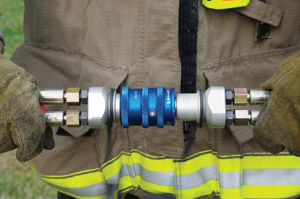
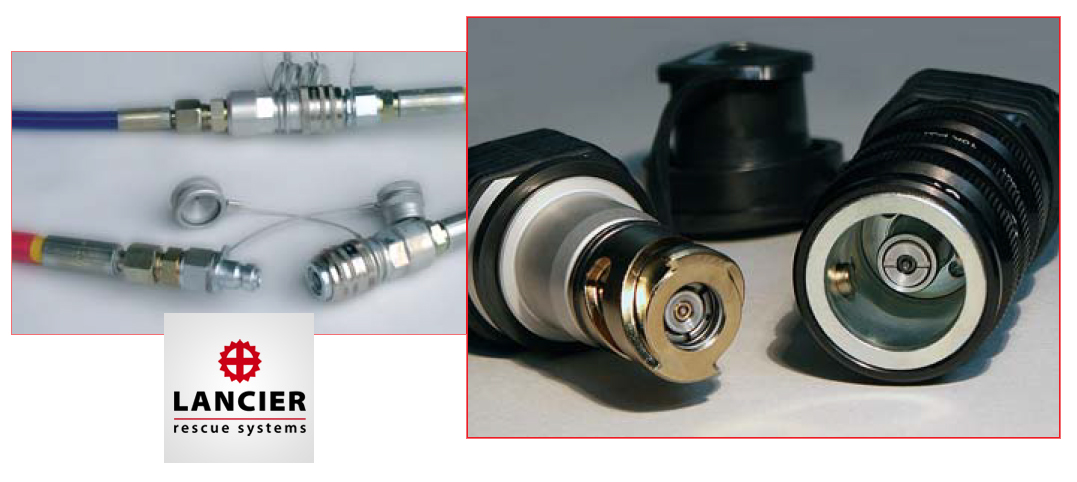
In the original article I listed the Lancier Single Coupling System and discussed possible similarities with systems from other manufacturers.
After checking this point again for the present revision, I would no longer keep the older AMKUS / Genesis / WEBER / LUKAS compatibility assumption as an operational statement. If an organisation still uses this equipment and needs to combine systems, the exact models should first be confirmed in writing by the manufacturer or an authorised technical representative.

LUKAS Rescue Systems
LUKAS still offers hydraulic power units at 700 bar with modern monocoupling technology and COAX hose configurations. At the same time, the company also offers its e³ / e³ CONNECT battery-powered rescue tools.
In the earlier version I mentioned possible compatibility with Genesis and WEBER. Today I would not rely on the shape of the coupling alone. Before any mixed-brand connection, the pump, hydraulic fluid, hose, working pressure, oil flow and — most importantly — the manufacturer’s approval for that exact combination should be checked.


RESQTEC Rescue Systems
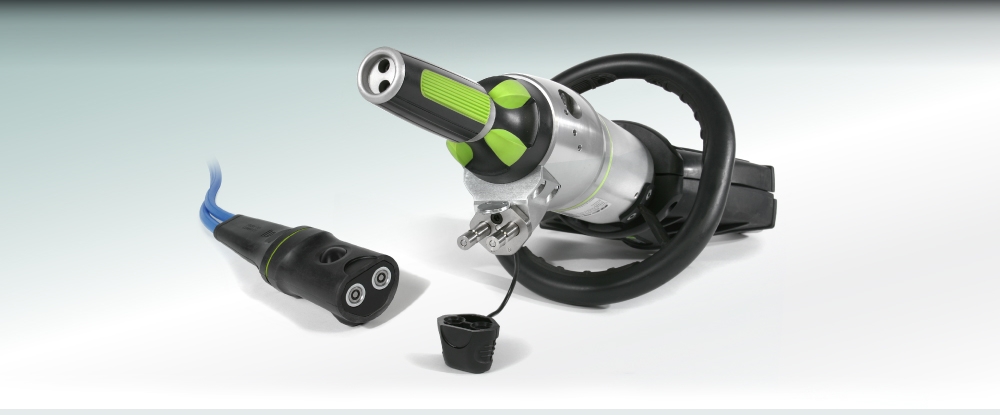
RESQTEC now offers hydraulic rescue tools operating around 350 bar, but it has also developed EDD – Electronic Direct Drive tools that work without hydraulic fluid, an external pump, a high-pressure hose or a hydraulic coupling.
This means the older GrootBeeld coupling has become more of a historical reference in this article. With EDD tools, the question of hydraulic coupling compatibility essentially disappears.
TNT Rescue Systems
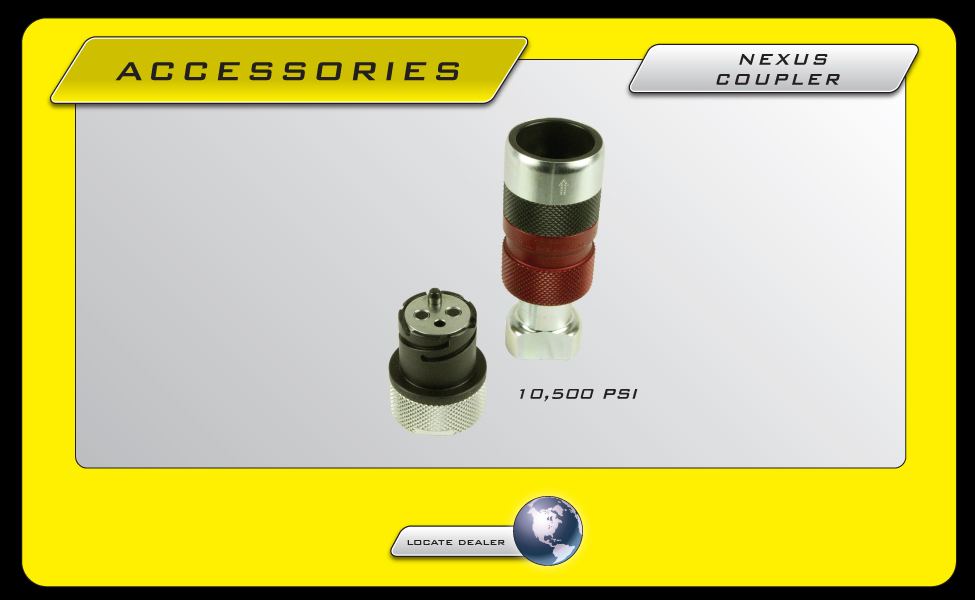
TNT continues to offer battery-powered tools as well as hose-connected hydraulic rescue tools. Its current hydraulic systems are in the region of 10,500 psi / 724 bar and use COAX-style configurations.
Here too I would not use the name or appearance of a Nexus, Flat-Face or similar coupling as proof that another brand can be connected safely. The exact system must be confirmed.
WEBER RESCUE SYSTEMS
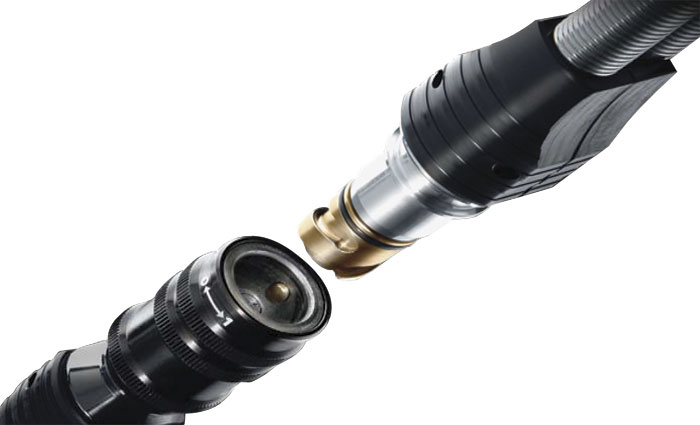
WEBER still offers hose-connected hydraulic rescue tools at 700 bar with its SINGLE coupling, while also offering the E-FORCE3 and SMART-FORCE battery platforms.
In the older version of this article I mentioned possible compatibility with Genesis and LUKAS. After checking the issue again, I prefer to put it differently: WEBER allows the use of power units from other manufacturers only under specific conditions and after technical confirmation. So I would not consider a mixed-brand connection safe simply because the couplings look alike.
Current Standards and System Approval
The current European standard is EN 13204:2025, which replaced the 2016 edition. It covers powered rescue tools for fire and rescue service use together with the necessary system components. In the United States, requirements that were previously associated with NFPA 1936 are now incorporated into NFPA 1960:2024.
Neither standard should be read as a cross-brand interoperability standard. Two tools may both comply with EN 13204 or NFPA requirements and still use different pressures, fluids, couplings, hoses or system architectures.
Battery Rescue Tools and the New Meaning of Compatibility
The rescue-tool market has changed significantly. HURST eDRAULIC E3/E3 CONNECT, LUKAS e³, WEBER E-FORCE3/SMART-FORCE, Genesis EFORCE, AMKUS battery tools and TNT battery platforms reduce or completely remove the traditional pump–hose–coupling problem.
At the same time, they introduce a different kind of compatibility question: batteries, chargers, diagnostics, software, spare parts, service support and common training. RESQTEC’s EDD tools go one step further by removing the hydraulic circuit altogether. So today I believe interoperability should be considered at the level of the whole equipment platform, not only the coupling.
Final Thoughts on Compatibility
Looking at the market today, single couplings and coaxial hose systems have clearly made hose-connected rescue tools faster and easier to deploy. What I would no longer support, however, is the older generalisation that six out of ten manufacturers are essentially using the same coupling and can therefore interchange tools.
The safer approach is to treat every rescue tool as part of the manufacturer-approved system. Before combining equipment from different brands, there should be written technical confirmation for the exact pump, hose, coupling and tool involved.
The different working pressures — 350, 700, 720 or 724 bar — are only one part of the problem. Hydraulic fluid, oil flow, return pressure, available oil volume, relief valves and the ratings of hoses and couplings are just as important.
My original point about cooperation between services still stands. If, for example, a professional fire service and a volunteer rescue team operate on the same island, it makes sense to discuss interoperability before equipment is purchased.
The solution, however, is not to improvise by connecting different hydraulic brands in the field. Interoperability can be achieved through a common approved platform, shared battery systems where technically possible, sufficient backup tools, standard operating procedures, joint training and — only where formally approved — manufacturer-approved adapters.
Before purchasing rescue equipment, I would therefore look at reliability, ergonomics, EN 13204/NFPA performance, service support, spare parts, common training, real interoperability and total cost of ownership — and not only at the purchase price.
I hope this revised article answers the original question more clearly and adds one more useful piece to the wider subject of technical rescue.
Updated Technical Sources
- EN 13204:2025 – Powered rescue tools for fire and rescue service use
- NFPA 1960:2024 – Powered Rescue Tools
- AMKUS Rescue Systems
- Genesis Rescue Systems – power units and coupling options
- Holmatro – CORE Technology
- LUKAS Hydraulik – current rescue tool range
- HURST Jaws of Life – current eDRAULIC rescue tools
- WEBER RESCUE SYSTEMS
- RESQTEC Rescue Systems
- TNT Rescue Systems
Last updated: 24 August 2026