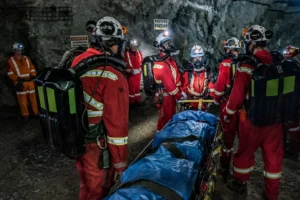
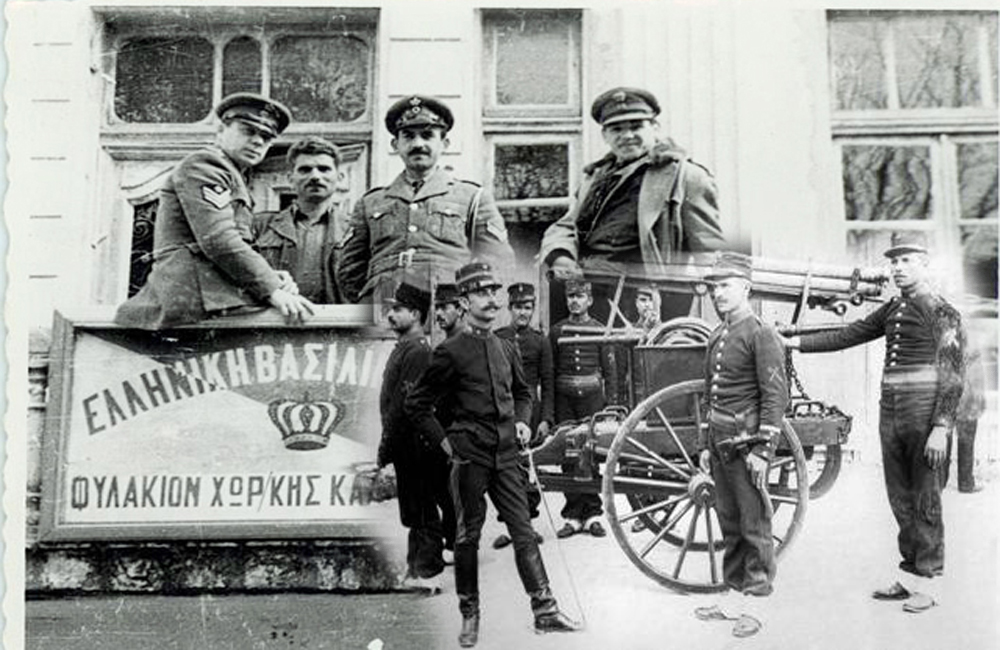
The Hellenic (Greek) nation construction as it has being formed up until now, has made an effort to organize the safety of it law abiding citizens as well as their assets, by creating various services and corps serving specified purposes.
Whether the above mentioned purposes have being achieved or not, is not to be analyzed presently, but it is useful to know our history to avoid reliving it in the future.
Politarhea (Militia) 1828-1833 – Elliniki Chorofilaki (Greek Gendarmerie) 1833-1984
J. Kapodistrias upon his appointment and the foundation of the first Greek state, he formed the predecessor of the Greek constabulary the “Militia”. This was a regiment consisting of 500 men under Makregiannis. Later, in 1829 he publishes the “police regulation and duties manual”. These duties were primarily: controlling movement of foreigners and inhabitants of various provinces, controlling conspiracies, controlling gun permits, beggars, club houses and coffee shops, construction site inspection, prison guarding, execution of administrative and judicial verdicts, enforcement of judicial police.
Upon Kapodistrias murder, chaos set in until the 15nth of June 1833 when the Royal constabulary (Vassiliki Chorofilalaki) was founded. At the same time, since the country was segmented in municipalities different bodies were created such as Municipal police (Demotiki astynomia), border police (Orofelaki), the National Guard (Ethnofelaki) and the Administrative Police (Deekitike Astynomea). During the period 1899-1913 a Cretan Regional police existed.
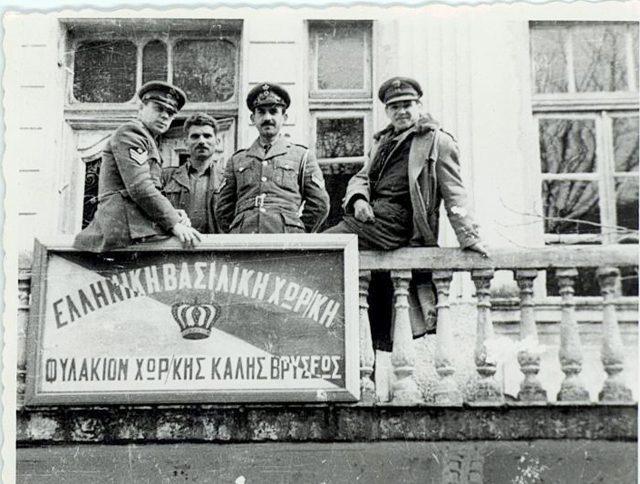
The Greek Regional Police was the first military structured body of the Greek Kingdom, with police duties.
It was constituted by Royal decree on June the 15nth of 1833, and as Mouer points upon the birthday of King Othon, its’ given name being ROYAL REGIONAL GUARD CORP renamed later to GREEK ROYAL CONSTABULARY and further later to CONSTABULARY, until 1984 when it was consolidated with the civil City Police, into a uniform police body under the name Greek Police (ELAS).
City Police (Astynomia Poleon) 1920-1984
The City Police was a body performing police duties in certain large cities in Greece. Founded in 1920 it was consolidated along with the Greek Regional Guard into the contemporary Greek Police.
Law 1370/1918 had already provided for the establishment of a separate police service in Athens, Piraeus, Thessaloniki, Patras and Corfu. The City Police was subsequently established under Law 2461/1920 “On the City Police”.
The first city in which the City Police became operational was Corfu in 1921, followed by Patras in 1922, Piraeus in 1923 and Athens in 1925. The City Police was ultimately not established in Thessaloniki, where policing remained under the Gendarmerie.
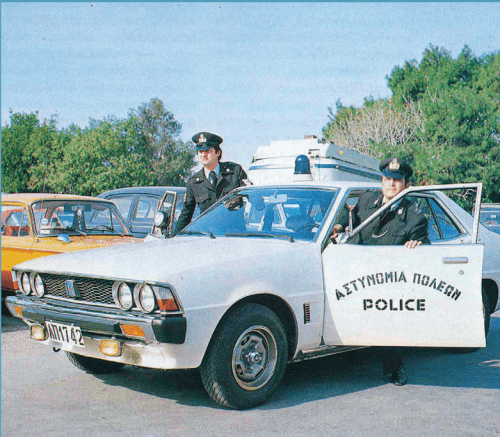
The City Police was a small core of 10-12 thousand people, its primary mission being policing the city centers of Athens, Pireous, Patra, and the city center of Corfu (not the entire island, just the capital). The city suburbs of Athens, Pireous, Patra, Corfu island (city capital excluded), the city of Thessaloniki as well as the remainder of the Greek domain was placed under the responsibility of the Greek Regional Guard. The Judicial Court Houses, the Parliament, the Palaces and the security of high dignitaries throughout the Greek domain were placed under the jurisdiction of the Greek Regional Guard also.
The two cores were autonomous, had separate chiefs of staff, but they were both under the jurisdiction of the Ministry of Public Order. Only under extremely serious circumstances there was cooperation among the two cores.
In 1984 the Greek government decided it was necessary to consolidate the two cores into one, thereafter named Greek Police and materialized it in October by law 1481/01-10-1984, F.E.K. A’-152. The Greek Police came into being November the 1st 1984 12.00 hrs.
Greek Police (Helliniki Astynomia) 1984-Present

The Greek Police in its present form was established in 1984, through the consolidation of the constabulary and City Police (law 1481/01-10-1984, F.E.K. A’ – 152).
It operates via its police stations and outposts in various cities and villages of Greece.
Operational jurisdiction includes thefts, burglaries, robberies, illegal immigration, counterfeited money bills, drug trafficking, illegal human trafficking and wherever its responsibility involves upholding public order, and suppression of criminal activities by taking all necessary measures, for pedestrian and vehicle safety through foot and seasonal patrols.

Fire Service Corps – Pyrosvestiko Soma
Fire Service Corps (Nomarchiakoi Pyrofhilakes, Dimotikoi Eirinofylakes 1833-1930, Pyrosbestiko Soma 1930-Present)

In 1833, that is as soon as the Greek nation was founded, the responsibility of fire safety was passed on to prefect governors (nomarhes) (decree 26/4 – 8/5/1833). Furthermore each municipality was responsible to provide staff “forest rangers” and the means to suppress and extinguish fires. Finally, the regiments of Army Trench Diggers (skapanes) were responsible for all public building fire safety.
In 1854 the “Firefighter Regiment” was founded with 92 men in its ranks.
In 1861 the regiment expanded to “Joined regiment trench diggers and firefighters”. Apart from the firefighter’s tasks, this joined regiment was involved in road construction works. Fire suppression tasks were aided by the Greek Regional Guard (Chorofilaki) and the Commanding Guard Post (Frourarheio). In 1909 the Joined regiment was called upon suppressing a huge fire that broke in the Palace, unsuccessfully.
In 1910 the “Fire Squadron” (Pirosvestiki Mira), with public servants and volunteers serving three year terms of employement.
On August 16th 1911, during the effort to suppress a major fire at the State Chemical Laboratory, many firefighters were injured and three firefighters lost their lives.
The squadron was accountable to the Military ministry and in 1914 was renamed as “Fire Regiment”. This regiment‘s services were offered exclusively in the cities of Athens, Pireous, Thessalloniki and Patra. The rest of the cities were under the jurisdiction and facilitation of the municipalities.
On April 26th 1926, the Firefighter Company was dissolved by decree and a “Fire Corps” was formed as an organization with its own command, independent from the remainder of the Army, although it remained under the Ministry of Military Affairs. This structure also proved inadequate in dealing with the major fires that followed, leading to demands for a more fundamental reorganization.
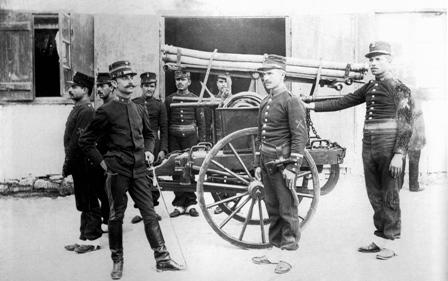
Insurance companies were alarmed and raised the issue of reorganizing the fire department core.
On August 30th 1929 the Greek government catered Alkiviades Kokkinakis, a chemical engineer, (Greek refugee from Russia) former commander of Petersburg Fire department, to conduct a survey concerning the operational organization of Fire Service Corps in Greece.
The independent Fire Service dept. was founded (May 12th 1930) by legislation act 4661/1930, concerning “Organizational structure of Fire Department Core”. It was an independent Fire Service operating as N.P.D.D. (Legally represented company of Public Interest), operating under the jurisdiction of the Ministry of Internal affairs, with internal legislative frame as well as independent management.
Defining the founding of Fire department stations, it was specified that the decision would lay on the Minister of Interior, based on population, commercial and industrial importance of the municipality, and certain general as well as special obligations of any county. Since 1968 and according to Law Revision act 360, the Fire Department is part of the Security Forces. Legislative act 1590/86 allows foundation of Fire Department stations in communities with industrial areas, or traffic junctions of great importance, and anywhere it is purposefully considered without any obligation of local authorities.
Development of the Fire Service network
During the first decade after the voting of the previously mentioned legislative foundation act, and up until the outbreak of the Greek-Italian war, Fire Services (Fire Stations), started operating on the following cities:
- 1932: Athens, Pireous and Thessaloniki (May)
- 1933: Patra
- 1935: Heraclion and Kavala
- 1938: Volos
- 1938: Larissa
- 1940: Elefsis, Kalamata, Ioanenna, Preveza, Corfu, Florina, Kozany, Drama, Mytilinae, Seres and Agrenion.
By 12/31/1950 apart from the above mention cities, equipped with Fire Stations were the following cities: Rethemno, Lamia, Aegio, Drama, Lefkada, Pyrgos, Rodos, Halkida and Karditsa. Later, Fire Stations started operating in multiple city locations for example: Amfissa in 1953, Nafplion in 1954 and so on. The pace picked up by the end of 60ies and thereafter as follows:
- 1968: Levadia
- 1970: Argos, Alexanroupoli, Amaliada, Veria, Katereni and Messologi
- 1971: Edessa
- 1972: Polegeros
- 1973: Egoumenitsa
- 1975: Kozani
- 1976: Elefsina, Kastoria, Lavrio and Orestiada
- 1977: Theva and Saint Nickolaos
- 1978: Gianetsa and Karpenesi
- 1979: Kilkis, Zakenthos, Parga and Naoussa
- 1980: Thesprotiko, Leheana and Greavena
- 1981: Gargaleani
- 1983: Eleftheroupolis
- 1984: Argostoli
- 1987: Samos
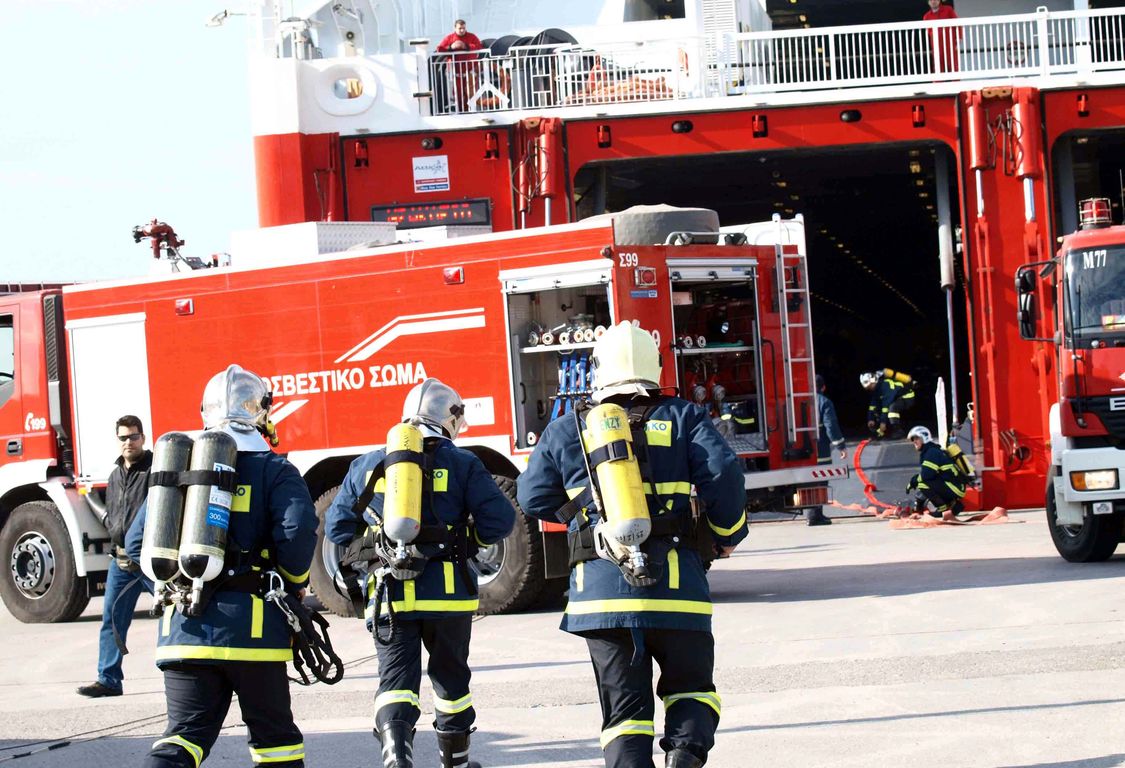
Today, the Hellenic Fire Corps operates through a nationwide network of regional commands, Fire Services, Fire Stations, Fire Units and specialised operational units. In large urban areas and locations presenting increased operational needs, more than one Fire Service or Station may operate.
During its early operational years, the Fire Department service core was managed by commanding officers who were dispatched from City Police (Astynomea Poleon) or the Constabulary (Chorofilaki). The situation was drastically altered in 1975, when Constantine Gikas, (fire dept. trained officer) was inaugurated Department Chief.
Volunteer firefighters and forest-fire responsibility
In 1991, the formal institution of the Volunteer Firefighter was introduced into the Hellenic Fire Corps through Law 1951/1991, followed by the regulatory framework for the organisation and operation of Volunteer Fire Stations and Units.
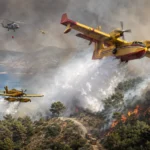
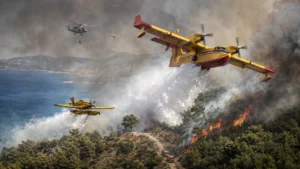
During the summer of 1998 (law act 2612) the Fire Department Core undertook the responsibility of commandment and suppression of forest fires, a task undertaken up until that time by the Forest Ranger Service. The corps was reinforced in materials and personnel through the transfers from the Forest Ranger Service, but the departmental shortages were not completely overcome.
The Fire Corps received significant reinforcement in equipment in the period preceding the Athens Olympic Games of 2004. Since then, however, its fleet, equipment, organisational structure and personnel have undergone several further phases of renewal and reorganisation.
The historic personnel and vehicle-shortage figures originally quoted in this article no longer represent the present situation and should not be used as current statistics.
For the 2026 fire season, official planning provides for approximately 19,000 permanent, five-year-obligation and seasonal firefighters. According to the Ministry of Climate Crisis and Civil Protection, approximately 16,500 are permanent or five-year-obligation personnel and 2,500 are seasonal firefighters. The operational system is additionally supported by volunteer firefighters and Civil Protection volunteer organisations.
According to the official Hellenic Fire Corps memorial record consulted for this 2026 update, 69 firefighters have lost their lives in the line of duty from 1911 to the present, including 31 who lost their lives during forest-fire operations following the transfer of forest-fire suppression responsibility to the Fire Corps in 1998.
Women in the Hellenic Fire Corps
Up until 1995 the Fire Department was served only by men of all different ranks. The first women joined the Fire Department on October 31st 1995, following a special recruitment procedure for university graduates, primarily engineers, entering directly at officer rank.
Dr. Kalliopi (Kalli) Saini was the first woman to join the Hellenic Fire Corps in 1995. A Mechanical Engineer with a doctorate from the Department of Mechanical Engineering and Aeronautics of the University of Patras, she went on to serve in operational and senior command positions during a distinguished career.
During the regular Fire Corps promotions and retirements of early 2025, Dr. Saini was promoted to the rank of Lieutenant General (Antistratigos) upon completion of her active service, becoming the first woman to attain that rank in the Hellenic Fire Corps. Dr. Kalliopi Saini passed away in September 2025.
Women now serve throughout the Hellenic Fire Corps in operational, technical and officer roles and across different ranks.
Hellenic Coast Guard (Limeniko Soma – Elliniki Aktofylaki) 1919-Present
The Hellenic Coast Guard (Limeniko Soma – Elliniki Aktofylaki) is the national coast guard.
Like most other coast guards, it is a paramilitary organization that can support the Hellenic Navy in wartime but resides under separate civilian control in times of peace.
It was founded in 1919 by an Act of Parliament (N. 1753/1919) and the legal framework for its function was reformed in 1927.
In 2011, Law 3922/2011 established the contemporary organisational framework and the name “Limeniko Soma – Elliniki Aktofylaki” (Hellenic Coast Guard), as well as its Headquarters.
Following subsequent governmental reorganisations, the Hellenic Coast Guard is today the principal operational arm of the Ministry of Maritime Affairs and Insular Policy.
The Hellenic Coast Guard Force is headed by the Senior Coast Guard Officer who has the rank of Vice Admiral.
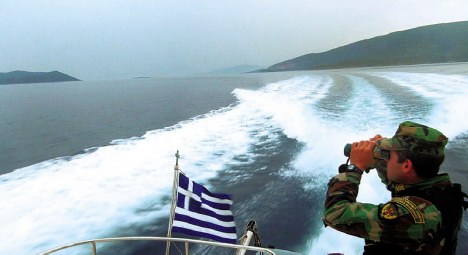
The basic roles of the Hellenic Coast Guard are law enforcement in sea, search and rescue, marine safety, pollution prevention at sea, fishery patrolling, prevention of the illegal immigration, drug interdiction. Between May 21, 1964 and 1980 the Hellenic Coast Guard had its own special flag, which was derived from the Greek Ensign with the addition of the crossed anchors badge on the center of the white cross.
Farming Police (Agrofilaki) 1835-2011
The term Agrofilaki described a specialised rural policing institution concerned principally with the protection of agricultural property and the prevention and investigation of offences in rural areas. Forms of agricultural policing existed in Greece from the early years of the modern Greek State.
The organization and the responsibilities of this institution were developed in the 20th century and specifically by law act 3030/1954 “about Agrofilaki” and a Royal Decree 171/1966 “concerning enforcing regulatory operational manuals for Agrofilaki”.
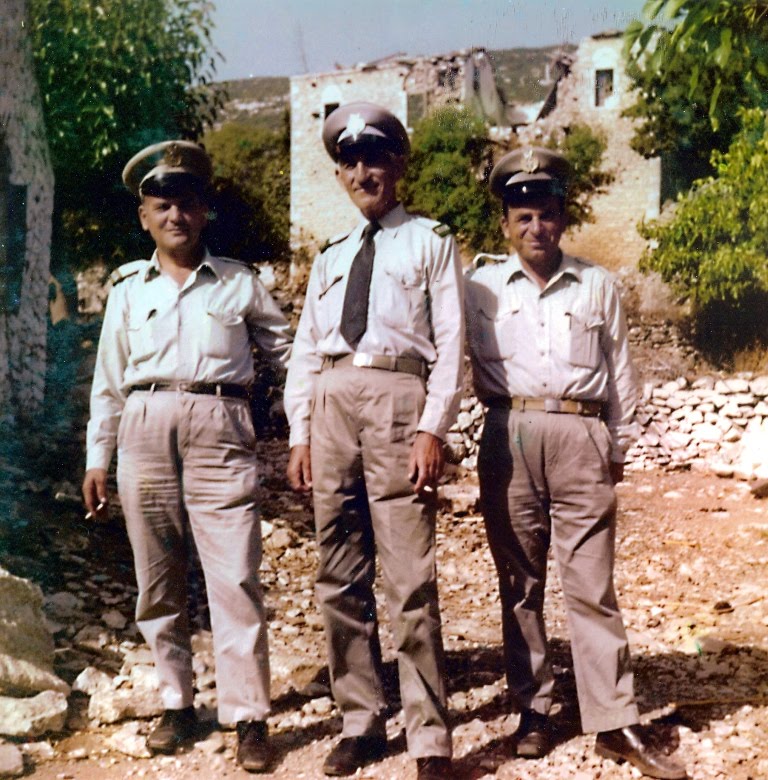
The institution was organised broadly along the lines of the Greek Constabulary and was responsible for the protection of agricultural property outside forests and urban areas, as well as the prevention and investigation of agricultural offences, rural patrols, irrigation-water management and related rural disputes.

The institution was reorganised several times during the 20th century and was re-established as the Hellenic Farming Police (Elliniki Agrofilaki) under Law 3585/2007.
However, the Hellenic Farming Police no longer exists. Under Article 21 of Law 3938/2011, it and its services throughout Greece were abolished, with personnel and relevant responsibilities transferred within the framework provided by that law to the Forest Service.
Military Police
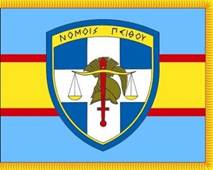
In state of war situations, the Military Police is in charge of guarding and securing (….) neuralgic and important locations, such as ports, airports and transport stations.
Additionally, in collaboration with Naval Guard Police (Naftonomy) and Air Force Guard police (Aeronomy), they are responsible for transportation, settlement and guarding war prisoners.
Furthermore, M.P’s carry out operative pursuit operations against homeland, or foreign enemies that might move against Greek Democratic institutions, or country citizens.
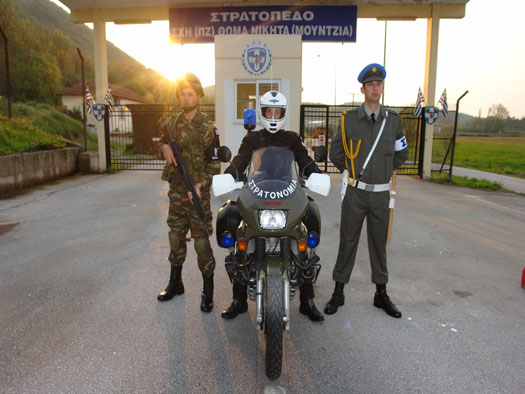
Part of our history as well (no comments) EAT-ESA (Military Police-Special Investigative Service). It was the main security corps during the dictatorship (1967-1974) and acted as secret police.
Greek Air Force Security / Aeronomia
E.A.A Greek Airforce Security (1945-1976) – Air Force Guard Police (1976-Present)
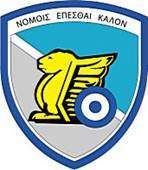
Aeronomia “it is wise to follow the law” as the ancient Athenian Menandros said. Menander was an Athenian playwright and one of the principal representatives of Greek New Comedy, who lived approximately 342/341-290 BC.
Aeronomy was founded in 1945 under the title Airforce Guard Police (E.A.A) or shortly Athens Aeronomia. It was originally stationed in “Alyssida” at the end of Patission Street.
In 1950 it was transferred to the delta of Phaliron where the settlements of the Military Airforce were.
Transferred again in 1962 to the General Air Force Chief of Staff.
In 1971 it was relocated in the Air Force base of Hellenikon.
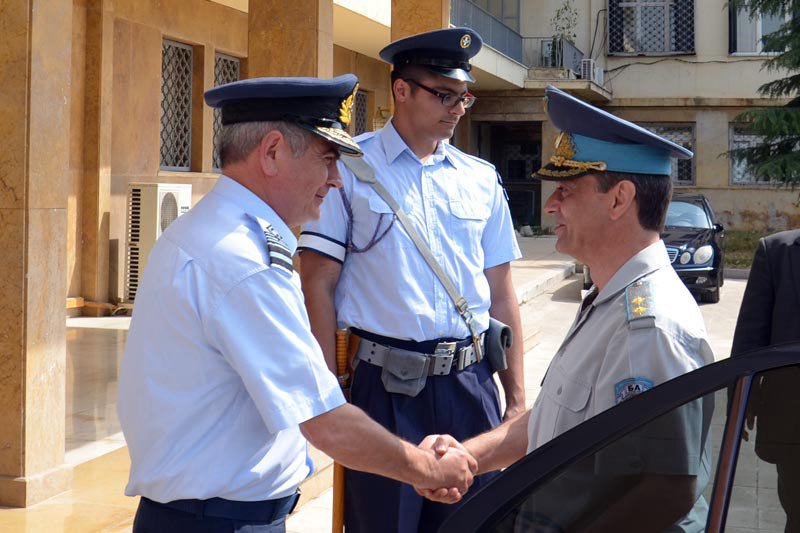
During 1974 it was relocated to the 30th Support Squadron in Phaliron Delta. In 1976 it was renamed by law L.Act 276 from Greek Airforce Military Police to Air Force Guard (AERONOMIA). The following year it was relocated back to Hellenikon. In 1988 it was transferred to Elefsina Military Base. In 1991 following yet relocation it went back to Air Force Base of Hellenikon. Finally in 2008 it was transferred to the Regiment of Vironas.
Naval Guard Police (Naftonomia) 2005-Present
The Naval Guard Police Service (Naftonomia Y.NA) was founded on January 31st of 2005.
It is based at Skaramangas area. Y.NA is in charge of conducting investigations concerning traffic accidents, in order to record the circumstances under which the accident occurred, as well as assessment by the command. Furthermore, it controls the enforcement of general order, discipline and orderly conduct of military personnel.
Forest Ranger Sector Agency (Dasonomy)

It was originally founded, after he Greek nation was free of occupation, as a sector of the Ministry of Economy (1833). Its main Jurisdiction was specified “National forestry merits, protection from the possibility of unlawful actions and their disposition from harmful procedures”.
In 1836 (three years later) the Forest Ranger Agency was created by law act concerning “organizing Forest Ranger Agencies”. Managerial positions were assigned to Bavarians, while the remaining positions were assigned to Greek citizens of various occupational specifications.
The first reorganization of Forestry Sectors took place in 1848 by legislative act “National Segregation and Formation of Forest Ranger Stations”. This act enabled the State to deduct the number of Forest Ranger personnel and it was thus specified that Forest Rangers ought to be populated by retired military Officers while a few months later all Bavarian Forestry employees were dismissed.
An important second reorganization, concerning the National Forestry materialized by Law H.I.G/1877. The Forestry Ranger Agencies were dispersed and the Regional Guard was authorized to guard and protect the forests as well as pursuit offenders. Meanwhile the I.R.S had the right to certify public rights and issue timber exploitation licenses.
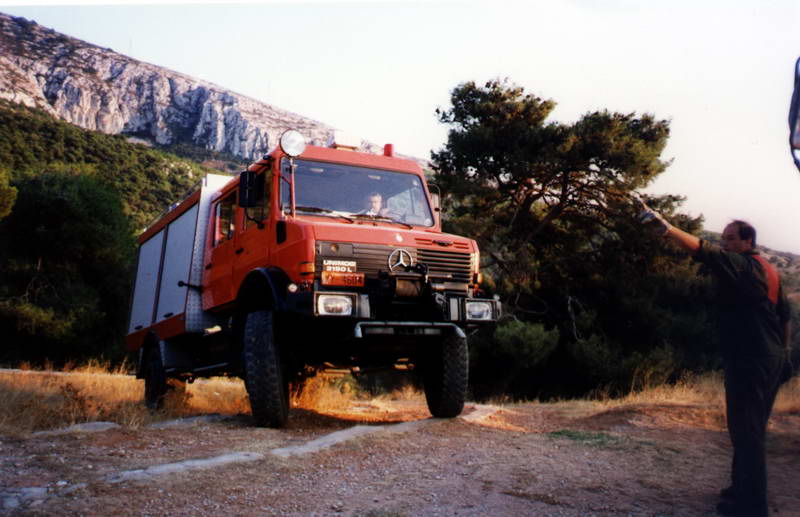
In 1893 yet another reorganization of the Forestry Agencies took place by Law B.R.X.B (Β.Ρ.Ξ.Β) and a new Central Agency was formed (Ministry of Economics – Department of Forestry). Therefore, a new Forestry Corps was established staffed by 20 Ranger Marshals and 350 Forest Rangers out of which 50 were sergeants.
In 1917 the Ministry of Agriculture was formed. The Forest administration and three sections were incorporated in this Ministry.
In 1919 Law Act 1687 legislated forestry positions for 20 Forest Inspectors, 100 Forest Marshals, 50 Forest sergeants and 1000 Forest Rangers. Two years later the Forestry Agency was irrevocably separated from the Regional Guard and the I.R.S by Law 2637/1921. It is unknown whether the aforementioned positions were staffed or remained vacant.
Forestry services were profoundly re-organized in 1924. Law 3077/24, known as the first forestry code, enabled this re-organization.
According to the above mentioned law, there were 14 forestall inspection districts, comprised by 55 Forestry marshals (Dasarhia), and 65 Forest ranger stations (Dasonomia). This infrastructure remained active for all forestall interests included in basic code 4173/29, after the basic law was effected.
Landmark point on the evolution of Forestall Services is considered the Presidential Decree (Π.Δ.) issued in 9/6/1931 “Concerning Forestall Management”. This decree specified the constitution of 13 forestall inspections, 15 class A forestry marshals, 27 class B’ forestry marshals, 45 class C’ marshals and 36 ranger stations. Furthermore, the decree specified the base locations, the manning, the duties and the organizational hierarchy of all forestall personnel.
Three more organizational units were added to the General Command, by Royal decree (Β.Δ.) 2.6.1955, Inspectoral: national forestall exploitation, forestall technical works and reforestation.
In 1959 following the dispersement of ΥΠΕΜ, the Sectors of technical Forestall Works were founded by Royal Decree 13-9/11 02 1959. This structure was maintained until 1961, when a new R.D 4/1961 was issued concerning the new organizational structure of forestall Sectors within the Ministry of Agriculture.
According to this Decree, the general Forestall command consisted of the General Forestall Inspection department, the Forestall Education and Appliance Department and 5 Managerial Sections. The External Forestall Sectors were comprised of 16 Forestall Inspection Departments, 9 Technical Forestall Works Inspection Departments, 77 Marshal Ranger posts and 40 forest Ranger stations. The personnel comprising these departments amounted to 176 forestall Specialists (Δασολόγους), 470 forestall Caretakers (Δασοκόμοι), and 280 forest Rangers.
When the forestall personnel was increased in 1964, the position of forestall Specialists amounted to 60, forestall Caretakers to 120 and forest Rangers. A new organizational scheme was envisioned and materialized by R.D 810/1966, according to which forestall inspection Departments were abolished. However the Inspectors remained and 13 regional forestall departments were created. 40 forests Ranger stations were abolished as well as all technical forestall works sectors, while the total number of forest Marshal Stations rose to 180.
This organizational scheme was maintained until 1970, when the Ministry of Agriculture reorganized the peripheral sectors by Law Λ7/1104.1970. This decision concerned the creation of 7 forestalls departments of Inspection acting as sectors among Prefects.
The sectors among prefects had 7 forestall inspection units, each staffed with 3 departments and two offices. Collectively the sector overlooked 15 forestall technical works supervision departments. The prefect organizational service was comprised of 33 Forestall Administrations staffed by 85 Forest Marshal departments (dasarhea), and 22 Forestall Administrations without Forest stations. The prefects services were comprised of 32 forestall directories. Each having 85 forest marshal directories with 22 forestalls marshal dept. without any forestall dept. On Attica and Thessaloniki, 2 directories of reforestation were founded.
With this reorganization the staff positions rose to 1.844, out of which 493 were forestall specialists (dasologoi), 725 forestall takers (dasokomoi) and 666 forest rangers (dasofilakes). This reorganization was not fully practiced until 1981, when presidential decree l. 1213/1981 modified it.
The organisational structure of the Forest Services has undergone several further reforms since the period described above and therefore the earlier prefectural structure should not be regarded as the present-day system.
A major contemporary change occurred in 2021, when the Forest Services were transferred from the Decentralised Administrations to the Ministry of Environment and Energy. They are now incorporated within the Ministry through the General Secretariat for Forests, the Directorates of Forests, Forest Offices and the Inspectorates for the Implementation of Forest Policy.
Last technical update: 30 August 2026
Article by Zafiriou Babis
Translated into English by Maria Lee Kox
Edited and technically updated by John Retsios – 8/2026
Sources and references
- Hellenic Police – Historical Review
- Hellenic Fire Corps – Historical Timeline
- Hellenic Fire Corps – Fallen in the Line of Duty
- Hellenic Fire Corps – 2025 senior officer promotions and retirements
- Ministry of Climate Crisis and Civil Protection
- Hellenic Coast Guard – Historical Review
- Law 3938/2011 – Abolition of the Hellenic Farming Police
- Ministry of Environment and Energy – Forests and Forest Services