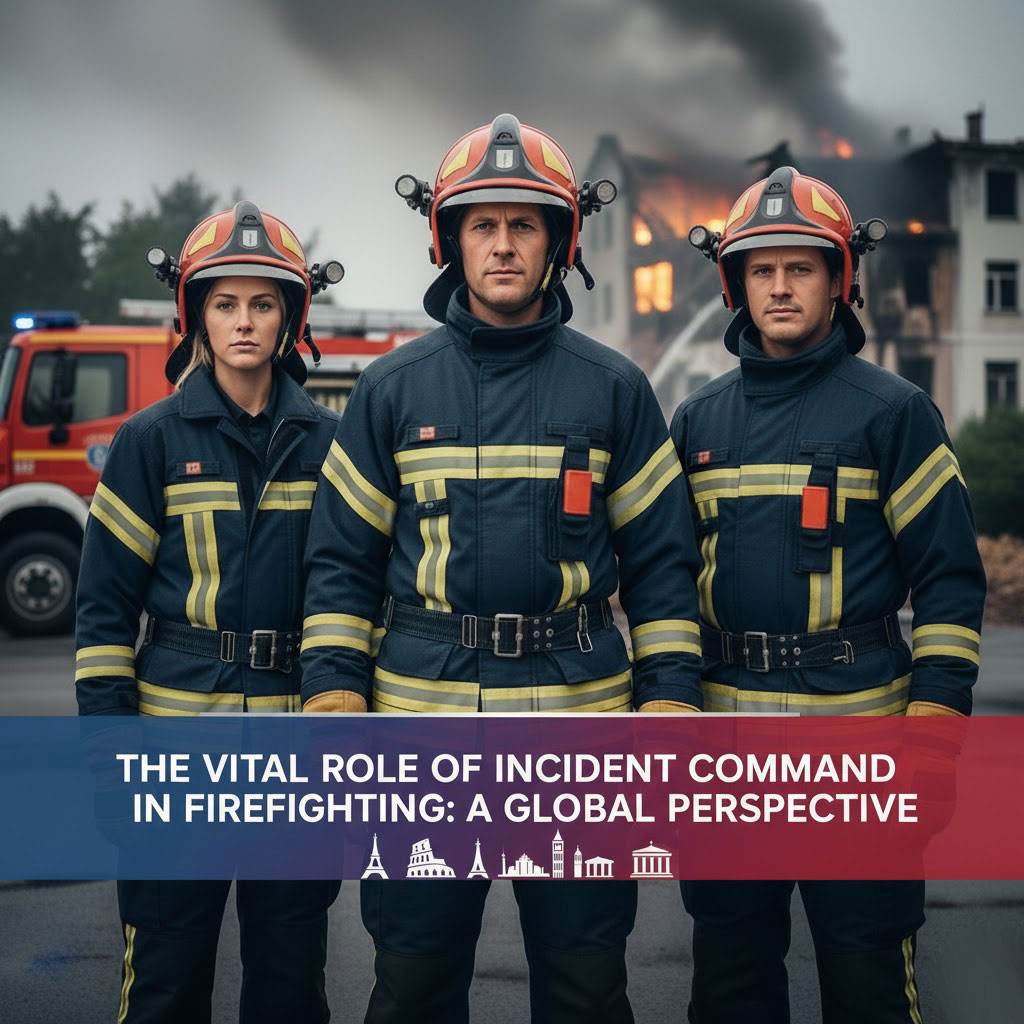
In emergency management, especially firefighting, the concept of incident command is essential. Incident command refers to the methods and systems used to direct personnel and resources during emergencies, ensuring coordinated and effective operations. This structured approach is particularly important in high-risk situations where lives are at stake and where decisions directly affect the safety of firefighters, other responders and civilians.
Incident command systems have evolved significantly, adapting to new challenges and incorporating lessons learned from previous emergencies. This article examines the role of the Incident Command System (ICS) in firefighting, explores international approaches, explains its importance in emergency management and considers future developments.
1. Understanding Incident Command
1.1 What Is the Incident Command System (ICS)?
The Incident Command System (ICS) is a standardized approach to the command, control and coordination of emergency incidents. It was developed in the United States during the 1970s, initially in response to difficulties coordinating resources during large wildfires.
ICS provides a flexible organizational framework that can be adapted to incidents of different sizes, types and levels of complexity.
The system integrates personnel, facilities, equipment, procedures and communications into a common organizational structure. This approach supports cooperation among responding organizations and provides a consistent framework for emergency response and operational safety.
Within the United States, ICS forms a central component of the broader National Incident Management System (NIMS).
1.2 The Organizational Structure of ICS
The Incident Command System is built around five principal management functions: Command, Operations, Planning, Logistics and Finance/Administration.
The organizational structure expands or contracts according to the needs of an incident. Not every position or section must be activated during a small emergency.
The principal roles include:
- Incident Commander (IC): Has overall responsibility for incident management, establishes objectives and priorities, approves the Incident Action Plan and oversees responder safety and resource allocation.
- Operations Section Chief: Directs tactical operations and coordinates the deployment of operational resources to achieve the incident objectives.
- Planning Section Chief: Collects and evaluates incident information, maintains situational awareness and coordinates the development of the Incident Action Plan (IAP).
- Logistics Section Chief: Provides the facilities, supplies, equipment, communications and other support services required for the response.
- Finance/Administration Section Chief: Oversees financial and administrative matters, including cost tracking, procurement, contracts and personnel time records.
Depending on the incident, the Incident Commander may also be supported by a Safety Officer, Liaison Officer and Public Information Officer. An Intelligence/Investigations function may be established when required.
This organizational arrangement promotes clear lines of authority, communication and accountability.
1.3 Key Functions of Incident Command
Incident command involves several closely connected management functions:
- Leadership: The Incident Commander must communicate clearly, establish priorities and adapt decisions as the situation changes. Effective leadership also requires an understanding of operational risks and responder capabilities.
- Decision-Making: Command personnel must assess the incident, evaluate available options and make timely decisions based on situational awareness, available resources and potential consequences.
- Resource Management: Personnel, equipment, vehicles and specialist resources must be assigned according to operational priorities. Their location, status and availability should be monitored throughout the incident.
- Incident Action Planning: Objectives, strategies, operational assignments and safety considerations must be communicated through an appropriate planning process.
- Safety Management: Risks must be continually evaluated, and control measures must be adapted to changing operational conditions.
2. Global Perspectives on Incident Command
2.1 Common Principles in Emergency Command
Although emergency management systems differ among countries, several important principles are widely recognized.
- Clear Command and Accountability: Responders must understand who has operational authority and to whom they report.
- Unified Command: When an incident involves several agencies with jurisdictional or functional responsibilities, authorized representatives can establish shared incident objectives and coordinate decisions without surrendering their individual agencies’ legal authority.
- Standardized Procedures: Common terminology, defined responsibilities and established communication procedures improve cooperation among response organizations.
- Interoperability: Different agencies must be able to exchange information, coordinate resources and operate effectively together.
International guidance, including ISO 22320:2018, addresses incident management principles, organizational responsibilities, coordination and cooperation between responding organizations.
2.2 Differences Between National Command Systems
Significant differences exist in how incident command is organized and implemented internationally.
- United States: The Incident Command System is a central component of NIMS and provides a standardized organizational approach for emergency response across different agencies and jurisdictions.
- United Kingdom: Emergency services use their respective command arrangements, supported in multi-agency incidents by the Joint Emergency Services Interoperability Principles (JESIP). These emphasize co-location, communication, coordination, joint understanding of risk and shared situational awareness.
- Other Countries: National arrangements differ according to legislation, emergency service structures, available resources and operational practices. International guidance can support common principles without requiring identical command organizations.
Differences also arise from organizational culture, levels of training, the availability of communications technology and the degree of cooperation between agencies.
Some emergency services make extensive use of geographic information systems, remote sensing and real-time operational data. Others rely more heavily on conventional communication and reporting arrangements.
These differences influence how quickly information reaches command personnel and how effectively operational resources can be coordinated.
3. The Importance of Incident Command in Firefighting
3.1 Improving Operational Safety and Efficiency
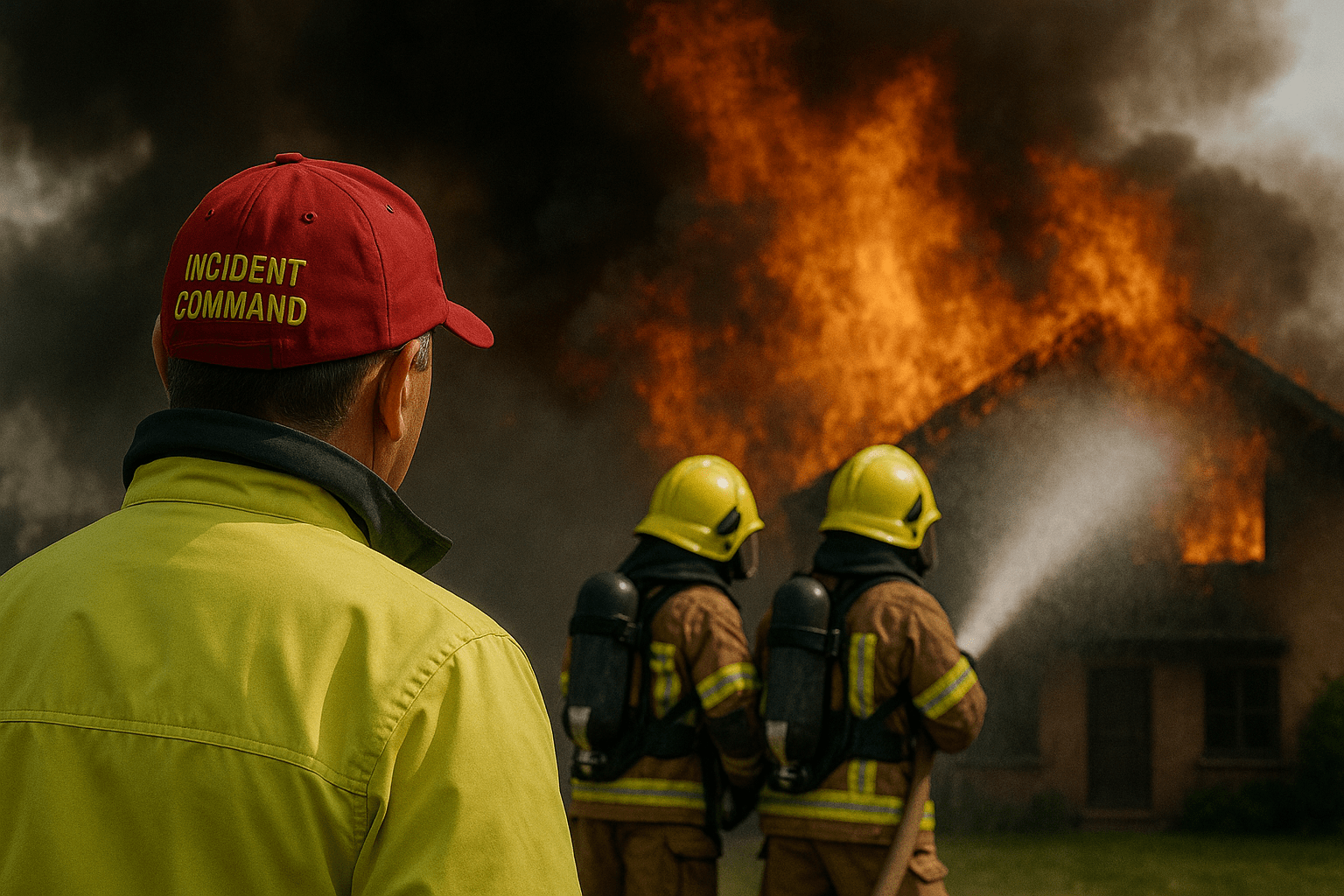
Effective incident command supports safer and more efficient emergency operations by establishing responsibilities, coordinating resources and maintaining awareness of operational hazards.
Its principal safety benefits include:
- Clear Responsibilities: Each responder understands their assigned task, reporting relationship and operational limitations.
- Coordinated Resource Deployment: Equipment and personnel can be assigned according to incident objectives, reducing unnecessary duplication and conflicting activities.
- Risk Assessment: Command personnel can continually evaluate threats to responders and the public.
- Operational Control: Tactical decisions can be reviewed and adjusted when conditions deteriorate or new information becomes available.
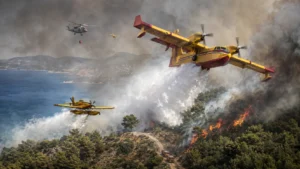
These principles are particularly important during rapidly developing incidents, including large wildfires, structural fires and complex industrial emergencies.
For example, industrial electrical fires may require coordination between firefighting personnel, electrical specialists, facility management and other emergency responders.
Incident command provides a framework for integrating these activities while maintaining clearly defined responsibilities.
3.2 Coordination Between Emergency Response Agencies
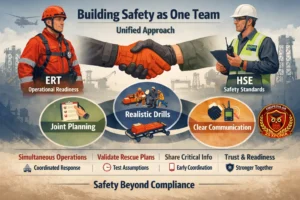
Major incidents frequently require cooperation among fire services, police, emergency medical services, civil protection authorities and specialist response teams.
An effective command arrangement helps these organizations work toward common priorities while respecting their individual operational responsibilities.
Important elements include:
- Inter-Agency Communication: Relevant information must be shared accurately and without unnecessary delay.
- Common Operational Objectives: Responding organizations must understand the immediate priorities and intended course of action.
- Resource Coordination: Personnel and equipment must be deployed in ways that support, rather than obstruct, other agencies.
- Shared Situational Awareness: Command personnel need a common understanding of hazards, operational conditions and developing threats.
Historical emergencies, including the September 11 attacks and Hurricane Katrina in 2005, demonstrated the importance of command arrangements, interoperable communications and multi-agency coordination. Reviews of these incidents also identified serious organizational and communication challenges.
Such events continue to influence emergency management training, planning and operational doctrine.
3.3 Training, Exercises and Operational Preparedness
Effective incident command requires continuous training and practical experience.
Command personnel must understand not only organizational procedures but also the operational capabilities and limitations of the teams they supervise.
- Initial Training: Personnel should understand the principles of incident command, organizational responsibilities, communications and resource management.
- Role-Specific Training: Commanders, section chiefs and other specialist personnel require preparation appropriate to their assigned responsibilities.
- Practical Exercises: Tabletop exercises, command-post simulations and full-scale drills provide opportunities to test decision-making and coordination.
- After-Action Reviews: Exercises and actual incidents should be evaluated to identify weaknesses and improve procedures.
Realistic exercises also help responders practise decision-making under pressure, particularly when information is incomplete and operational conditions are changing rapidly.
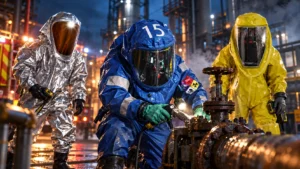
During hazardous materials incidents, for example, effective communication between personnel wearing chemical protective suits can be particularly challenging. Communication procedures should therefore be included in practical training and emergency planning.
4. The Future of Incident Command
4.1 Emerging Technologies
Technological developments offer new opportunities for improving incident command, particularly in the collection, presentation and exchange of operational information.
Important developments include:
- Unmanned Aerial Systems (Drones): Can provide aerial reconnaissance, support damage assessment and improve awareness of incident conditions.
- Artificial Intelligence: May support data analysis, predictive modelling and the identification of operational trends. Its outputs must be evaluated by qualified personnel and should not replace command judgment.
- Geographic Information Systems (GIS): Allow incident locations, hazards, access routes and resource deployments to be displayed on digital maps.
- Advanced Communications: Interoperable radio networks and digital information-sharing systems can improve communication between responding organizations.
- Real-Time Monitoring: Sensors and connected equipment can provide information on environmental conditions, equipment status and other operational parameters.
These technologies can improve situational awareness, provided that their information is reliable, understandable and available to the personnel who need it.
Technology also introduces challenges involving data quality, cybersecurity, communications failures and dependence on electronic systems.
4.2 Evolving Emergency Management Challenges
Incident command systems must adapt to an increasingly complex operating environment.
Climate change, urban expansion, new industrial technologies and growing infrastructure dependencies can produce emergencies that involve multiple hazards and organizations.
Examples include large wildfires affecting populated areas, industrial incidents involving hazardous materials and emergencies that disrupt critical infrastructure.
Such incidents may require prolonged operations, specialist resources, complex evacuation arrangements and cooperation between agencies operating across administrative boundaries.
Command systems must therefore remain flexible, with procedures and training regularly updated to reflect operational experience and emerging risks.
4.3 International Collaboration and Shared Learning
International cooperation will remain important as emergency incidents become more complex and, in some cases, extend beyond national borders.
- International Cooperation: Sharing operational experience and established good practices can improve preparedness and command capabilities.
- Common Terminology: Compatible communication and organizational concepts help responders from different countries work together.
- Joint Training: Multinational exercises provide opportunities to identify differences in procedures and improve coordination.
- Shared Resources: Mutual assistance arrangements allow organizations and countries to provide personnel, equipment and specialist capabilities during major emergencies.
International standards, joint exercises and lessons learned from previous incidents can support more effective cooperation between emergency response organizations.
5. Conclusion
The Incident Command System provides an organized approach to managing emergency operations, defining responsibilities and coordinating resources.
Its core principles, including clear leadership, accountability, operational planning, effective communication and continuous risk assessment, are fundamental to the management of complex firefighting incidents.
Although national emergency management systems differ, the need for coordinated decision-making and effective cooperation between responding organizations remains universal.
Future improvements will depend on appropriate training, practical exercises, reliable communications, careful integration of technology and the systematic use of lessons learned.
As emergencies become more demanding, the ability to maintain clear command arrangements and coordinated operations will remain essential to protecting responders, communities and critical infrastructure.
References
- Federal Emergency Management Agency (FEMA). National Incident Management System (NIMS). FEMA, National Incident Management System.
- Federal Emergency Management Agency (FEMA). Incident Command System, organizational structure and operational guidance. FEMA ICS Resource Center.
- International Organization for Standardization (ISO). ISO 22320:2018, Security and resilience — Emergency management — Guidelines for incident management. ISO 22320:2018.
- Joint Emergency Services Interoperability Principles (JESIP). Joint Doctrine: The Interoperability Framework. JESIP Joint Doctrine.
- U.S. Fire Administration (USFA). National Incident Management System: Command and Coordination. USFA Guidance.
- Waugh, W. L., Jr., & Streib, G. (2006). Collaboration and Leadership for Effective Emergency Management. Public Administration Review. DOI: 10.1111/j.1540-6210.2006.00663.x.
- Comfort, L. K., & Haase, T. W. (2006). Managing Intergovernmental Responses to Catastrophic Events. Public Administration Review. DOI: 10.1111/j.1540-6210.2006.00661.x.