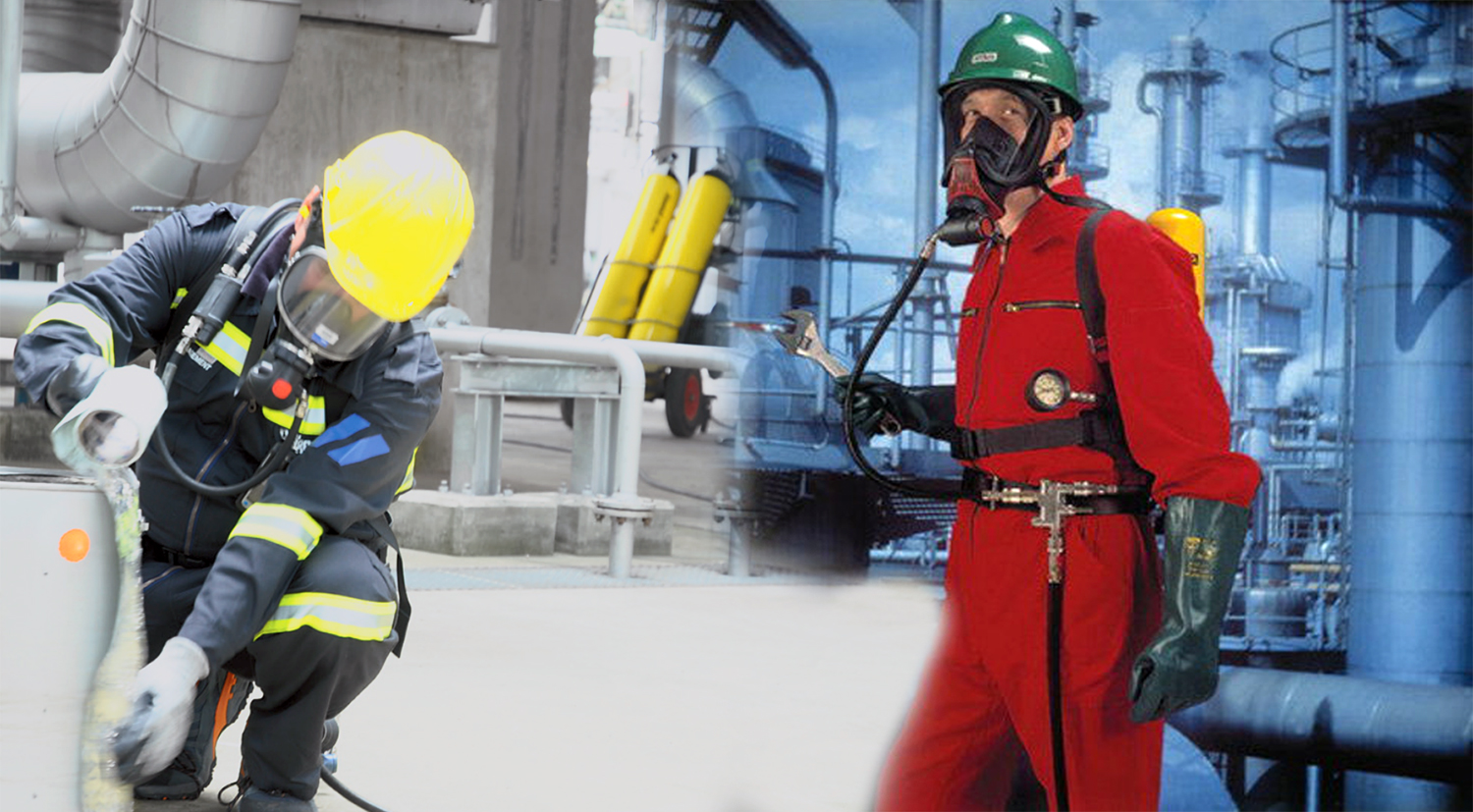
In hazardous industrial environments, maintaining a reliable supply of breathable air is essential for worker safety. An Automatic Switch-Over Valve (ASV) allows a compatible breathing apparatus to use an external compressed-air supply while retaining an independent cylinder as a backup source.
If the external airline supply fails or its pressure falls below a specified threshold, the ASV automatically transfers the breathing-air supply to the connected cylinder. This arrangement can provide critical protection during an emergency, allowing the wearer to begin a controlled evacuation from the hazardous area.
This article explains how automatic switch-over valves operate, their connection arrangements, the applicable European standards, manufacturer-specific operating characteristics and the safety precautions required when using combined airline and self-contained breathing apparatus systems.
What Is an Automatic Switch-Over Valve?
An Automatic Switch-Over Valve is a pneumatic device designed to transfer the breathing-air supply between two compatible sources without requiring the wearer to operate a manual changeover control.
In a typical combined respiratory protection system, these sources are:
- Primary supply: An external compressed-air airline system, generally configured as a demand-valve breathing apparatus under EN 14593-1.
- Secondary supply: A self-contained compressed-air cylinder connected through an approved breathing apparatus or escape device.
The purpose of the ASV is to maintain breathing-air continuity if the external supply becomes unavailable.
Such systems may be used in industrial plants, refineries, offshore facilities and certain confined-space operations, provided the equipment configuration is approved for the intended application and the necessary emergency arrangements are in place.
For additional information on respiratory protective equipment and its European standards, see our article on open-circuit self-contained breathing apparatus.
Important: An ASV provides an automatic changeover function. It does not replace the need for an adequately charged backup cylinder, correct equipment selection, verified breathing-air quality, effective communications or a planned emergency evacuation procedure.
System Configuration and Connections
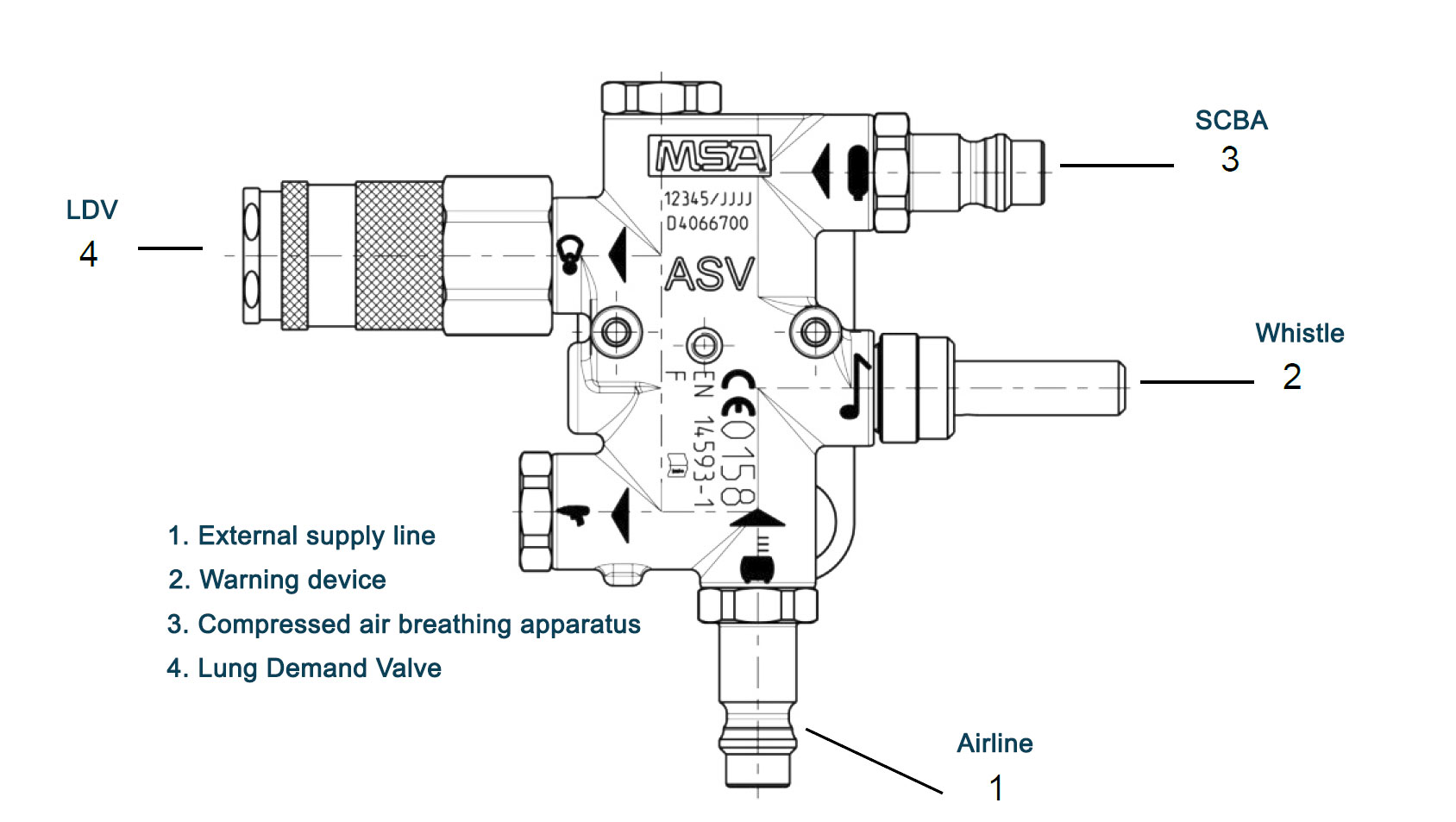
The Three Main Air Connections
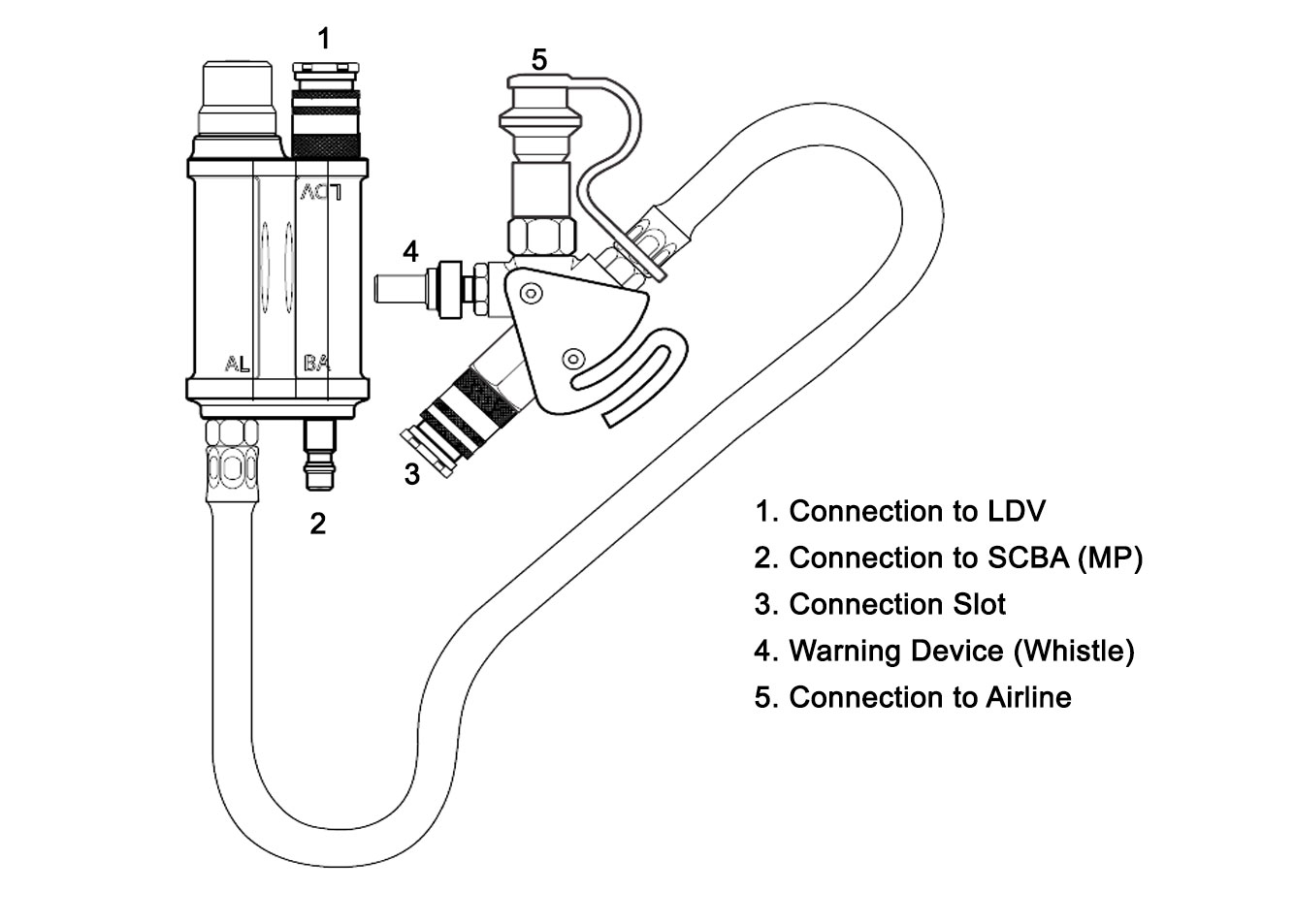
An ASV normally incorporates two medium-pressure air inlets and one outlet to the lung demand valve. Depending on the approved equipment configuration, it may be mounted at the waist or integrated into the breathing apparatus assembly.
| Connection | Function |
|---|---|
| Airline Inlet (AL) | Receives breathable compressed air from the external supply system. |
| Breathing Apparatus Inlet (BA) | Receives medium-pressure air from the connected self-contained breathing apparatus or escape cylinder system. |
| Lung Demand Valve Outlet (LDV) | Delivers air to the compatible lung demand valve connected to the full-face mask. |
Connections must be compatible with the approved assembly and secured in accordance with the manufacturer’s Instructions for Use (IFU).
Correct connection alone is insufficient. The system must also be checked for leaks, adequate supply pressure, correct cylinder pressure and satisfactory operation of the changeover mechanism.
How the Automatic Changeover Works
Although operating procedures differ between manufacturers and equipment configurations, the general principle follows five stages:
- Preparation: The wearer and the responsible equipment operator complete the required pre-use inspections, including checks of the cylinder, facepiece, demand valve, airline and ASV.
- System Pressurization: The approved backup breathing apparatus is prepared, and the cylinder valve is opened as specified in the manufacturer’s instructions. In systems requiring the cylinder valve to remain open during airline operation, it must not be closed.
- External Airline Supply: Once the external source is connected and operating within its specified pressure and flow limits, the ASV supplies breathing air from that source.
- Automatic Changeover: If the airline pressure falls below the valve’s calibrated threshold, the ASV changes to the backup cylinder supply.
- Emergency Response: Upon a changeover indication, pressure loss or confirmed airline failure, the wearer must follow the established evacuation procedure. Work must not continue on the assumption that the backup cylinder provides sufficient reserve for the original task.
For positive-pressure systems, the approved assembly is designed to maintain appropriate facepiece pressure during normal operation and changeover. The actual performance must be verified against the specific manufacturer’s approval and operating instructions.
Switch-Over Pressure and Warning Devices
One of the most important technical considerations is that switch-over pressure is not identical across all ASV models.
For example, published technical information for the Dräger PAS ASV identifies an external supply pressure range of approximately 6–10 bar, with changeover to the cylinder supply at around 4–5 bar, depending on the version and its specified tolerances.
MSA ASV arrangements may use different operating and changeover values. Published MSA technical documentation includes configurations requiring an external supply pressure of approximately 6–8.5 bar, with switching thresholds determined by the specific device.
These figures are examples from manufacturer documentation and must not be treated as universal settings.
Warning devices also differ between ASV configurations. Some units incorporate an audible warning that activates when breathing air is taken from the self-contained cylinder. Other ASV versions may not include an integrated warning device.
Consequently, the operator must verify the exact model, its warning arrangements and the complete approved equipment configuration before use.
Some automatic switch-over valves return to the external airline source when sufficient pressure is restored. However, pressure recovery does not automatically mean that the original operating conditions are safe.
Safety requirement: Any unexpected switch-over, airline disconnection, supply interruption or abnormal warning must be treated according to the approved emergency procedure. Restoration of pressure must not be used as justification for continuing work without assessing the cause of the failure.
European Standards and Regulatory Framework
The applicable European standards depend on the complete respiratory protective equipment configuration, including the airline apparatus, self-contained unit, full-face mask and associated connections.
An individual ASV should not be assumed to provide compliance with every applicable standard simply because it is installed between two certified breathing apparatus components.
| Standard | Scope and Relevance |
|---|---|
| EN 14593-1:2018 | Compressed-air line breathing devices with demand valves for use with full-face masks. Relevant to the external airline breathing apparatus configuration. |
| EN 137:2006 | Self-contained open-circuit compressed-air breathing apparatus with full-face masks. Type 1 or Type 2 requirements apply according to the intended use and approved equipment. |
| EN 402:2003 | Compressed-air escape apparatus with full-face masks or mouthpiece assemblies. Relevant where an approved escape-device configuration is used. |
| EN 12021:2014 | Quality requirements for compressed gases supplied for breathing apparatus, including relevant breathing-air purity criteria. |
| EN 136:1998 | Requirements, testing and marking for full-face masks used as respiratory protective devices. |
| Regulation (EU) 2016/425 | European regulatory framework for personal protective equipment, including relevant conformity assessment requirements. |
The distinction between EN 137 Type 1 and Type 2 is important. Type 2 covers the additional requirements associated with more demanding firefighting applications. It should not automatically be presented as a mandatory classification for every industrial ASV installation.
Similarly, the requirements for a working SCBA configuration and an escape-only breathing apparatus are not interchangeable.
For updates on applicable respiratory protection standards, consult the FirePedia reference on European and international safety standards.
Equipment Compatibility and Manufacturer Approval
ASV-equipped breathing apparatus must be used only in combinations approved by the relevant manufacturers.
The existence of compatible-looking couplings does not establish technical compatibility or regulatory conformity.
Before assembling or using a combined airline-SCBA system, the responsible personnel must confirm:
- The exact ASV model and its approved breathing apparatus combinations.
- The compatibility of the ASV, pressure reducer, demand valve and full-face mask.
- The permitted external supply pressure and required airflow.
- The calibrated changeover and return-to-airline pressures.
- The presence, type and function of any warning device.
- The required cylinder capacity and minimum initial pressure.
- The approved hose types, connections, maximum lengths and permissible configurations.
- The applicable inspection, maintenance and testing requirements.
For example, the Dräger PAS ASV is designed to connect compatible compressed-air breathing apparatus to an external supply and provide automatic changeover to the cylinder if the external source fails.
MSA also offers automatic switch valve configurations for selected breathing apparatus systems. Their operating characteristics and approvals must be established from the documentation for the exact model being used.
Manufacturer approval should be verified for the complete assembly rather than inferred from the certification of individual components.
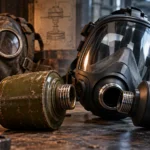
Examples of ASV Equipment

MSA Automatic Switch Valve.
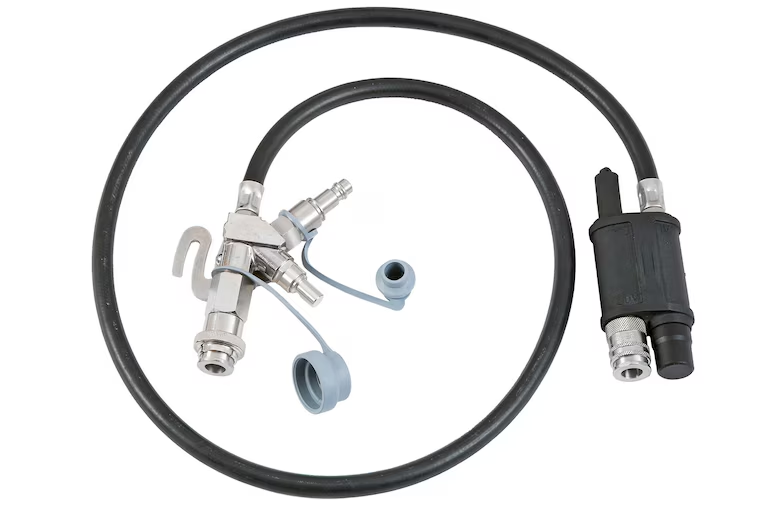
Dräger PAS ASV Quick Fit BA Kit.
Operational Limitations and Human Factors
Although an external airline may support longer working periods than a self-contained cylinder alone, it must not be regarded as an unlimited or inherently fail-safe air source.
Its reliability depends on the compressor or storage arrangement, pressure regulation, available capacity, air quality, hose configuration and the integrity of the supply system.
The following limitations require particular attention:
- Finite Backup Air Supply: The quantity of air available after changeover depends on cylinder volume, pressure, breathing rate, equipment configuration and the reserve needed to complete an emergency escape.
- Physical Workload: Wearing breathing apparatus increases physical demands, especially when combined with protective clothing, difficult access or strenuous work.
- Heat Stress: Environmental conditions, protective equipment, work intensity and individual physiological factors influence safe working duration.
- Communication: Full-face masks, high background noise and complex environments can make verbal communication difficult.
- Airline Routing: Hoses may become entangled, crushed, damaged, kinked or disconnected during operations.
- Hose Length and Pressure Loss: Maximum hose length depends on the approved system, its fittings, internal diameter, pressure losses and manufacturer specifications. A universal 100 m limit must not be assumed.
- Breathing-Air Quality: The external air supply must comply with EN 12021 and the equipment manufacturer’s specifications.
- Escape Arrangements: The available backup air must be sufficient for the planned evacuation under credible emergency conditions.
There is also no universal 60-minute working limit applicable to every ASV-equipped respiratory system.
The permitted working period must be established from the manufacturer’s instructions, the workplace risk assessment, environmental conditions, physical workload and arrangements for work and recovery.
Likewise, assigning a general escape duration of 15–30 minutes to all backup cylinders is inappropriate. The actual available breathing time depends on the equipment and operating conditions.
Critical point: Backup-cylinder capacity must be assessed against the time and air consumption required to reach a safe atmosphere. The nominal cylinder capacity alone is not a reliable indication of usable escape duration.
Safety Procedures and Pre-Use Checks
Before entering a hazardous atmosphere, competent personnel must verify that the complete respiratory protection system is suitable for the identified hazards and functioning correctly.
Pre-Entry Verification
- Risk Assessment: Evaluate the atmosphere, oxygen availability, potential contaminants, work activity, access and escape arrangements.
- Medical Fitness: Confirm that personnel are medically suitable for the physical demands of the assigned respiratory protective equipment, according to the applicable occupational health arrangements.
- Facepiece Fit: Ensure the selected tight-fitting mask provides an appropriate fit. Fit testing must follow the applicable respiratory protection programme, and the wearer must complete the required pre-use seal checks.
- Equipment Inspection: Check the ASV, breathing apparatus, mask, demand valve, pressure reducer, hoses and connections.
- Cylinder Pressure: Verify that the backup cylinder is adequately charged for the planned operation and emergency escape.
- Cylinder Valve: Ensure that it is opened and maintained in the position required by the approved equipment instructions.
- Functional Testing: Complete the manufacturer’s specified ASV changeover, leakage and warning-device checks before use.
- External Air Supply: Confirm the required pressure, airflow, breathing-air quality and security of the supply arrangement.
- Communication: Establish an effective method of communication between the wearer, attendant and emergency response personnel.
- Emergency Planning: Confirm the evacuation route, available air reserve and arrangements for assistance or rescue.
These checks are particularly important during confined-space work. FirePedia examines related failures in 10 common mistakes in confined-space operations, including unsuitable respiratory protection, poor atmospheric monitoring and inadequate rescue planning.
Actions Following Airline Failure
When an unexpected airline failure or ASV changeover occurs, the wearer should follow the established emergency procedure for the approved equipment and operating environment.
The essential priorities are:
- Recognize the warning or loss of external supply.
- Stop the assigned work.
- Confirm that breathing-air supply is maintained, without delaying evacuation.
- Notify the attendant or control point using the agreed communication procedure.
- Begin evacuation through the designated safe route.
- Request assistance or initiate the rescue plan if safe evacuation is compromised.
- Withdraw the affected equipment from service until the cause of the failure has been investigated and the system has been checked.
Personnel must not remove their facepiece in an unsafe atmosphere or attempt unapproved repairs while exposed to the hazard.
Maintenance, Testing and Breathing-Air Quality
Reliable ASV performance depends on regular inspection, maintenance and functional testing carried out according to the manufacturer’s instructions.
Maintenance arrangements should address:
- Inspection of pneumatic connections, seals and hoses.
- Testing of the ASV switching function and applicable pressure settings.
- Verification of warning-device operation, where fitted.
- Inspection and maintenance of the pressure reducer and lung demand valve.
- Cylinder inspections and pressure testing where applicable.
- Verification of breathing-air quality in accordance with EN 12021.
- Documentation of faults, repairs, inspections and service history.
Compressed-air systems used for breathing protection must be protected against contamination, including carbon monoxide, excessive moisture, oil and other substances that could compromise the quality of the breathing air.
Monitoring and testing arrangements should reflect the air supply system, its potential sources of contamination and applicable requirements.
The intervals for servicing and testing must not be generalized across all ASV products. Each system must follow the requirements and service schedules of its manufacturer.
Conclusion
Automatic Switch-Over Valves (ASVs) provide an important safety function in compatible combined airline and self-contained breathing apparatus systems.
When properly configured, they can maintain breathing-air continuity following a loss of external supply and support a safer emergency evacuation.
However, their effectiveness depends on far more than the automatic switching mechanism.
Correct equipment selection, approved component compatibility, an adequate backup air reserve, verified air quality, appropriate maintenance, practical training and a realistic emergency plan are all essential to safe operation.
For industrial safety teams and emergency responders, an ASV must be considered part of a complete respiratory protection and emergency management system, not a substitute for its other essential safeguards.
References
- Dräger. PAS ASV Automatic Switch-Over Valve, Product Information and Instructions for Use. Dräger PAS ASV.
- MSA Safety. Compressed Airline Breathing Apparatus and Accessories, Operating Manual, including Automatic Switch Valve technical information. MSA Operating Manual.
- EN 14593-1:2018. Respiratory protective devices, compressed air line breathing devices with demand valve, Part 1: Devices with a full-face mask. Standard information.
- EN 137:2006. Respiratory protective devices, self-contained open-circuit compressed-air breathing apparatus with full-face mask.
- EN 402:2003. Respiratory protective devices, lung governed demand compressed air escape apparatus with full-face mask or mouthpiece assembly.
- EN 12021:2014. Respiratory equipment, compressed gases for breathing apparatus. Standard information.
- EN 136:1998. Respiratory protective devices, full-face masks, requirements, testing and marking.
- European Union. Regulation (EU) 2016/425 on personal protective equipment. EUR-Lex.